

Introduction:
Restitution transcends the physical return of objects; it is a complex journey of healing, dignity restoration, cultural revitalisation and reparatory justice.
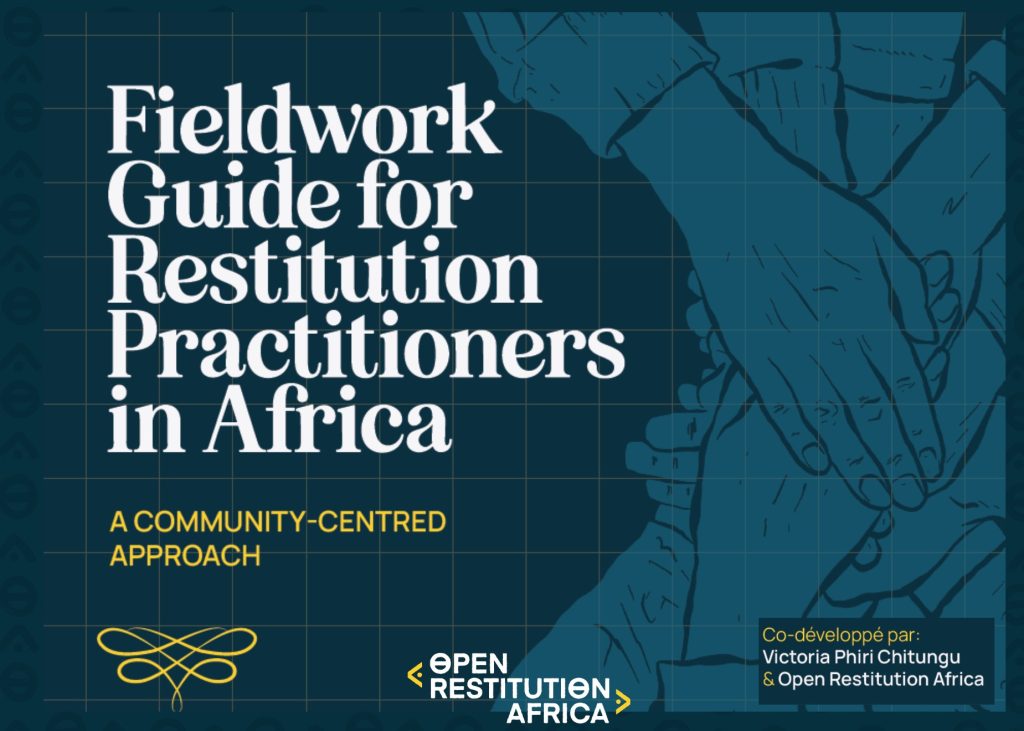
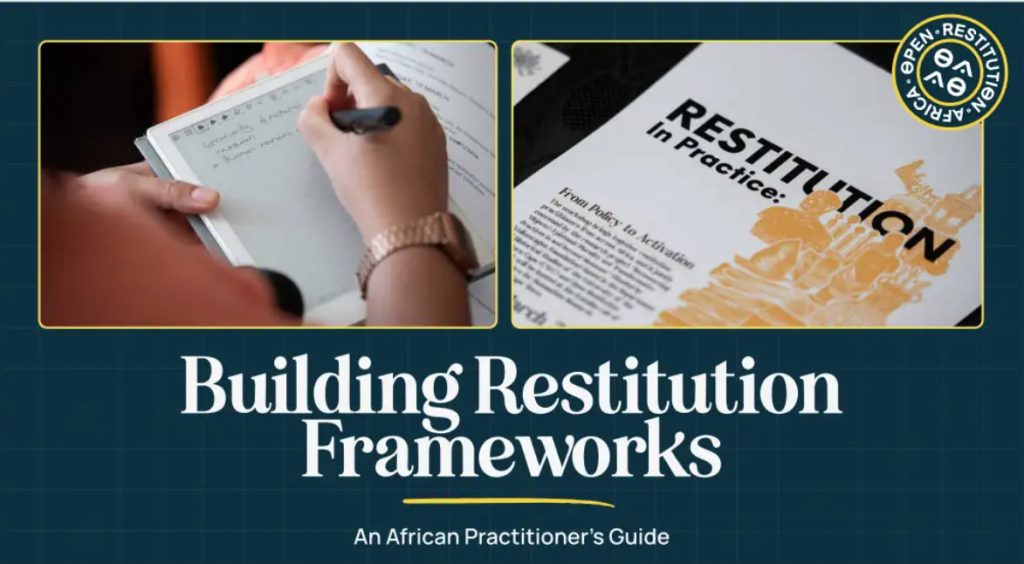
As a growing number of African nations begin to shape policies for the return of material heritage and human ancestors, Open Restitution Africa designed this guide to support practitioners in developing holistic and sustainable frameworks that respond to this complexity.
By integrating insights from our advocacy campaigns, research and collaborative engagements with practitioners, we sought to address shared challenges in restitution policy-making. This resource aims to equip African practitioners with the tools to build Africa-centred restitution governance frameworks, and empower stakeholders to “start where they are” leverage existing resources, and prioritise community agency at every turn.
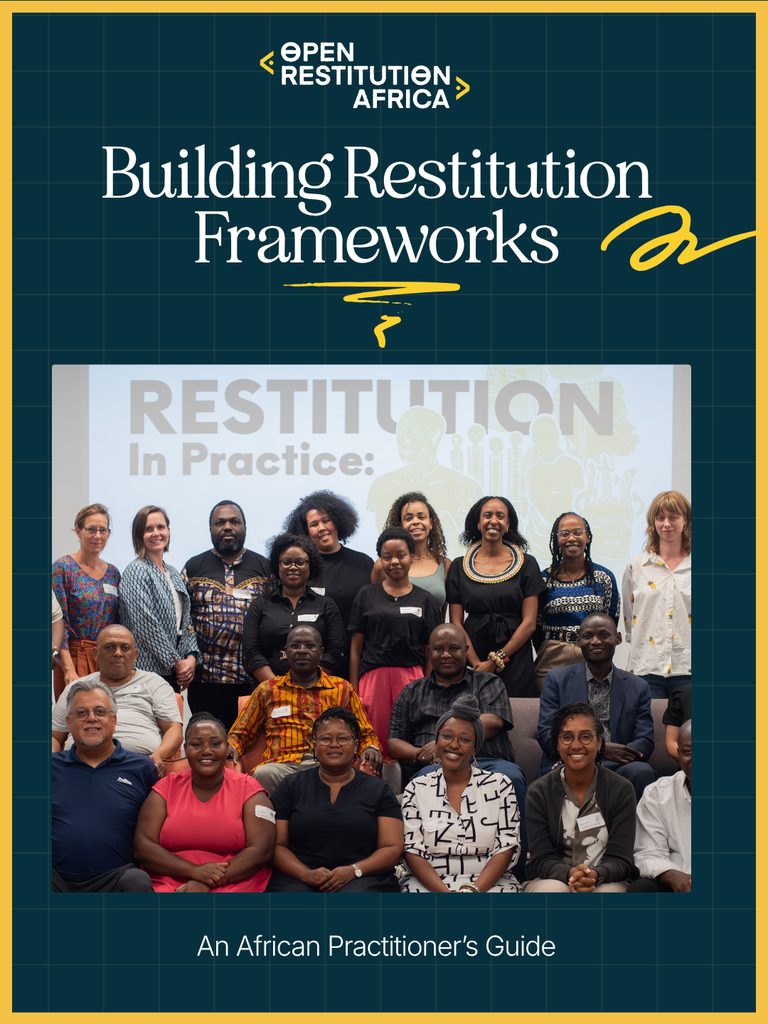
How Was The Guide Developed:
We initiated the development of this guide after discovering a consistent gap in our engagements with Africans undertaking restitution work: a lack of accessible information regarding the bodies, regulations and standards that governed restitution on the continent, and in the countries that hold African material heritage and human ancestors.
To address this gap, we adopted a comprehensive, collaborative research approach. We began by mapping the frameworks that were readily visible online, and documenting frameworks that were referenced in our case studies of restitution processes across 13 African countries. What we found was that most African nations lacked specific legislation and policies for restitution, relying instead on a patchwork of local, regional and international laws, alongside formal and informal specialised bodies (see ORA’s Legislation and Policy Database here).
This foundational learning was deepened during a 2025 Baraza with the University of Western Cape. Here African restitution practitioners, policymakers, museum professionals and researchers added to our database of frameworks, shared critical policy needs, and further discussed how restitution policies could be better aligned to respond to the lived realities of restitution in Africa.
Thereafter, to consolidate our learnings from these various entry points and to refine our focus for a restitution policy-making guide, we convened a group of “Champions”—key participants in these processes in East, West, and Southern Africa. Through an online survey and collaborative workshop, we invited Dr. Babatunde Adebiyi (Nigeria), Dr. Goodman Gwasira (Namibia), Prof. Kimani Njogu (Kenya), Prof. Kodzo Gavua (Ghana), and Victoria Phiri Chitungu (Zambia) to share their perspectives and experiences across a range of thematic areas. These included goal setting, common gaps, stakeholder inclusion, regional agency and implementation. We also invited them to weigh their context-specific concerns to assess what the most pressing needs were across different regions.
Following this rigorous consultation, we developed a draft document that responded to the shared needs and insights raised by the group. Our aim was not to develop a template, but rather an approach that captured the different stages at which different countries develop policy. The resulting guide synthesises these multi-vocal insights, evidence from case studies, and ongoing feedback from the Champions.
Core Framework Development Considerations:
The approach to restitution policy-making that is presented in the guide is structured into four pivotal phases and takeaways:
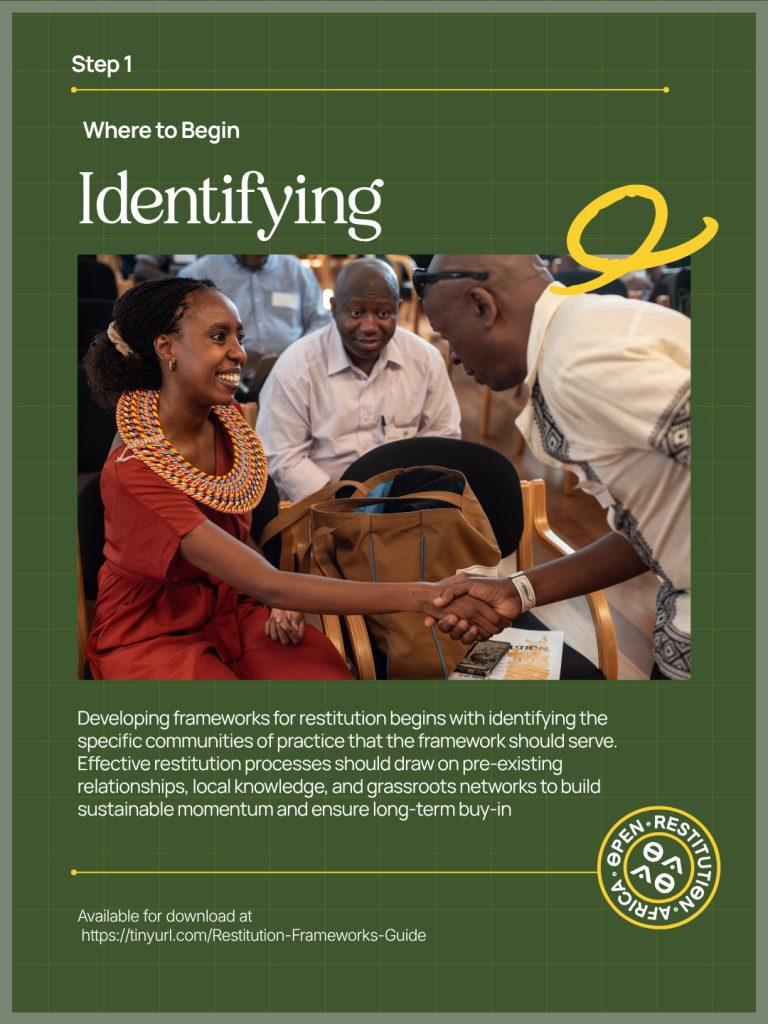
- Where to Begin (Identification): This section outlines the foundational approach to building restitution frameworks by grounding them in community needs and defining specific short- and long-term objectives that prioritise a holistic, multi-layered process of repair over the mere physical return of objects.
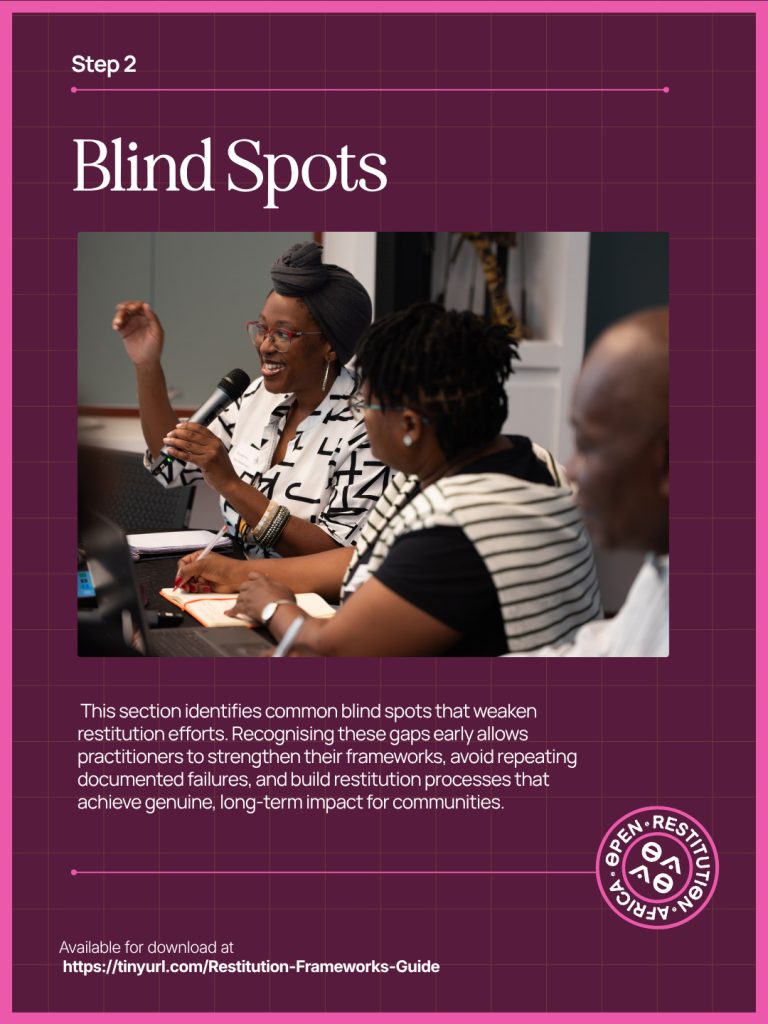
- Blind Spots (Navigating Challenges): This section identifies critical pitfalls in restitution planning—such as neglecting reintegration planning, intergenerational engagement, and spiritual significance—and advocates for a holistic, context-sensitive approach instead of rigid, universal solutions.
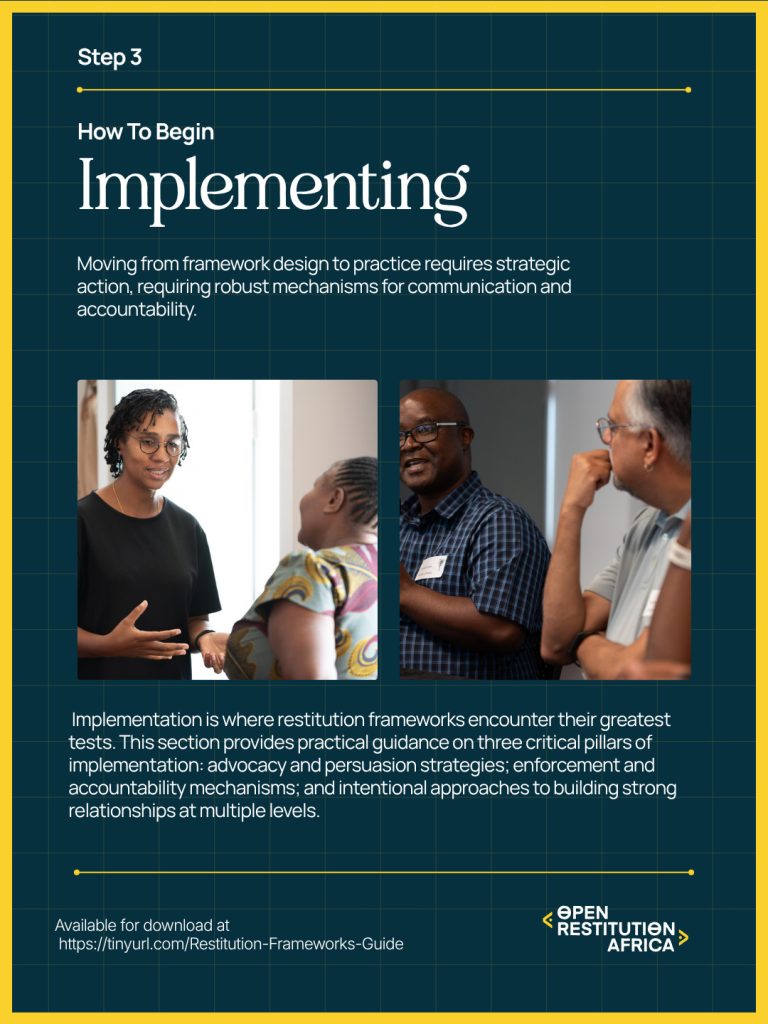
- How to Begin (Implementation): This section outlines three pillars for effective restitution implementation: advocacy that centers human dignity and spirituality, accountability through robust institutional mechanisms, and equitable relations that prioritise community-led partnerships.
- Strategic Sustainability: To ensure sustainable restitution policies, the guide encourages practitioners to move beyond reliance on constrained government budgets by exploring diverse, innovative funding models and reframing restitution as a strategic investment in national identity and community well-being.