
First of its kind Data and AI Platform accelerating the return of African belongings and ancestors launches today
Built by Open Restitution Africa(ORA),the ORA Open Data platform puts newly documented restitution data into the hands of the people, catalyzing African restitution via open access to historic and contemporary cases, and AI-powered tools
(March 31, 2026) — Open Restitution Africa (ORA), the leading research and technology initiative advancing the return of African belongings and ancestors, launches the Open Restitution Africa Open Data Platform, the first digital platform providing open access to verified, grass-roots information on African restitution processes.
Developed over six years by ORA’s all-women pan-African team, the platform shares historic and contemporary case studies and features an AI-powered tool that helps communities, practitioners, and cultural professionals retrieve practical insights, understand restitution histories, and support return processes. This publicly accessible, bilingual (English and French) research and action tool allows users to explore past restitution cases and access relevant guidance, helping individuals and communities draw lessons to advance their own informed restitution efforts.
Founded in 2020 by Chao Tayiana Maina and Molemo Moiloa, ORA has spent six years conducting grassroots research across Africa, producing 25 restitution case studies spanning 200 years and in nearly every region of the continent. The ORA Open Data Platform builds on this groundbreaking work, surfacing insights from these case studies while providing access to a growing resource library that consolidates centuries of African-led restitution insights, including videos, podcasts, data visualizations, and a roster of contacts for African experts and practitioners. This research revealed a critical gap: restitution knowledge has often been siloed, undocumented, and inaccessible—even to those leading returns. Historically, restitution has largely been negotiated between Western museums and governmental structures, leaving out communities, researchers, familiars, and grassroots actors. ORA’s work reframes the field to center these voices.
ORA’s impact has already been significant. The founders have been invited to speak by government agencies, universities, museums, and at the African Union (February 2025). They’ve convened town halls, screenings, and cross-continental gatherings to activate their research data and explore its potential for informing policy. Having achieved their initial goals, ORA is now passing the tools to a broader ecosystem of educators, activists, policymakers, cultural workers and African communities to carry the work forward. The platform will remain available to support ongoing education, research, and activation of the data.
At its core, the ORA Open Data Platform reflects a fundamental truth: there is no single pathway to restitution. Each journey is shaped by political, cultural, spiritual, and institutional contexts, yet shared patterns and milestones emerge. By making this knowledge accessible, the platform serves to strengthen understanding and facilitate future returns.

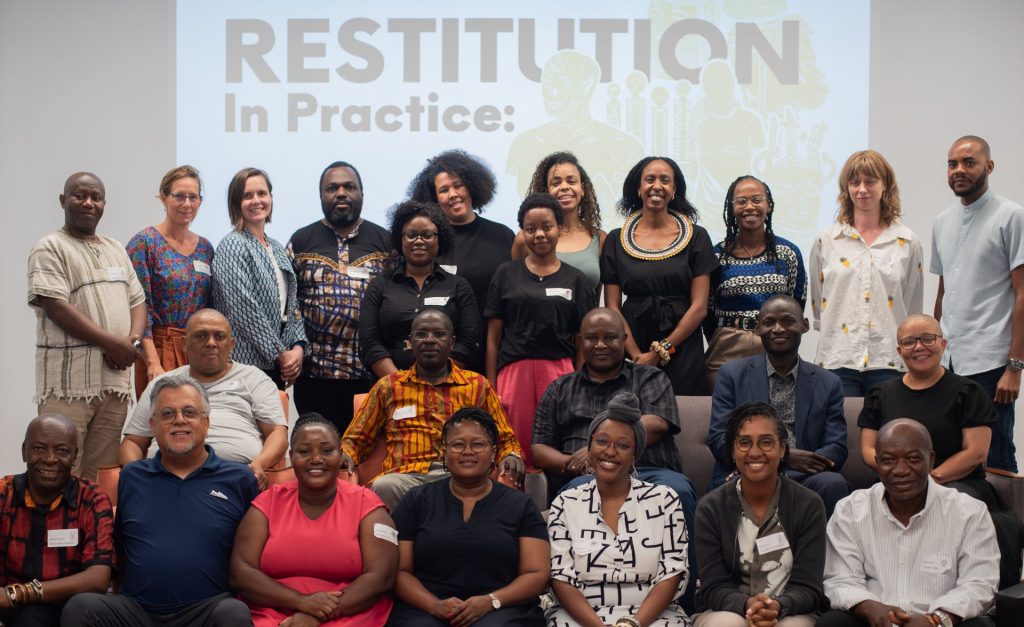
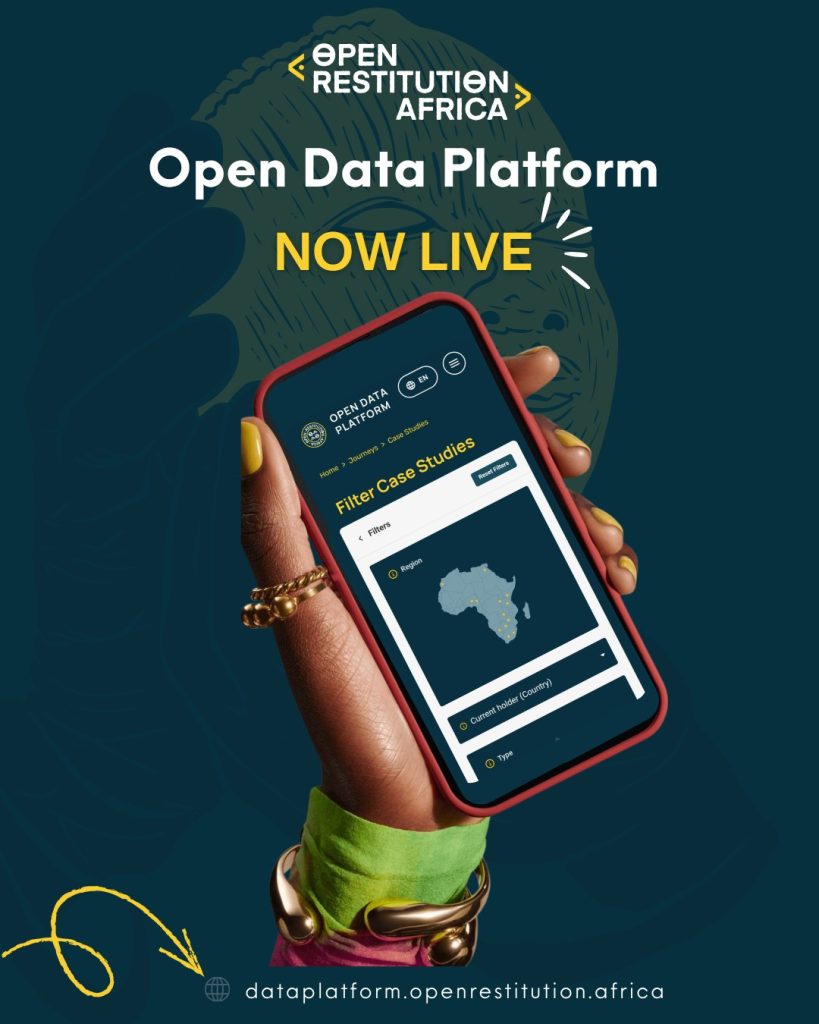
Image 1: The team behind Open Restitution Africa (ORA), the leading research and technology initiative advancing the return of African belongings and ancestors Image 2-3: Open Restitution Africa (ORA) Open Data Platform
The Open Restitution Africa Open Data Platform includes four integrated tools:
1. Restitution Journeys – An Interactive Visualisation of Case Study Data
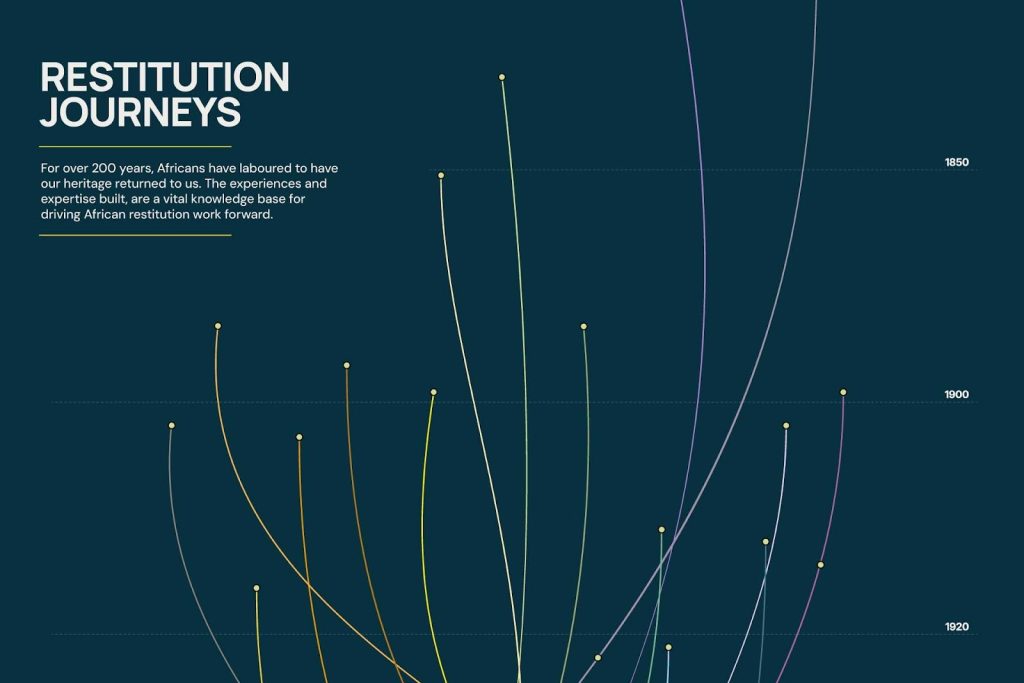
- A dynamic timeline maps 25 restitution cases from the 1800s to 2026, with color-coded nodes tracking key events: initial contact, negotiations, African-led accountability, and legal, diplomatic, and community-driven actions. Users can explore individual case journeys and observe parallel case developments, highlighting trends like the acceleration of restitution in the 2000s and post-2020. Rather than prescribing a template, the tool demonstrates how lessons can be drawn across diverse pathways.
2. Case Study Database & “Case Studies Like Mine” Tool
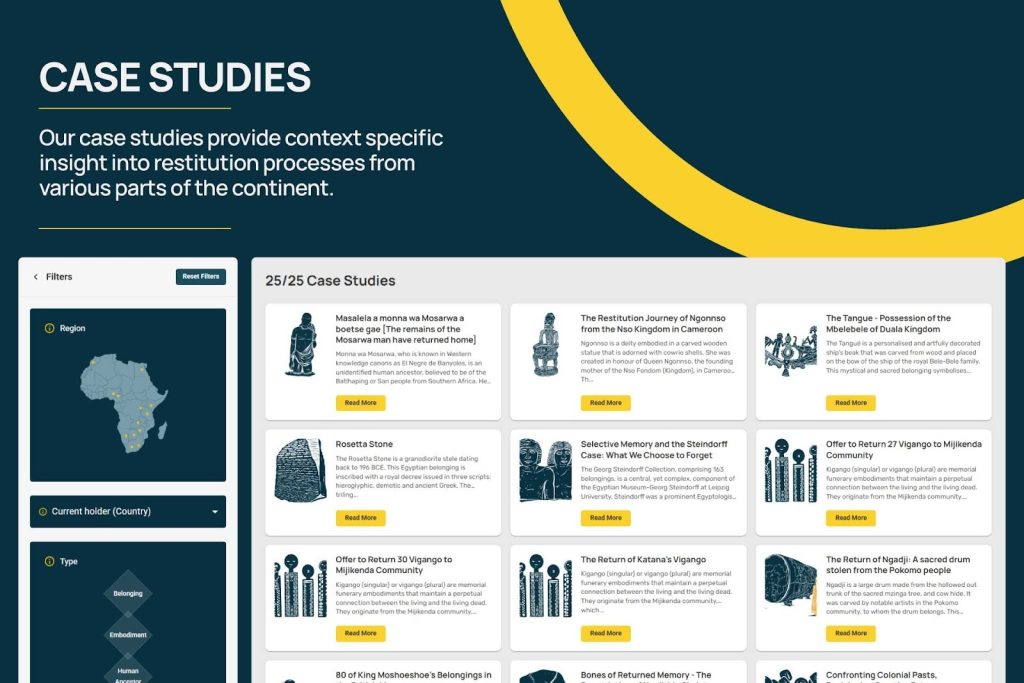
- Users can filter cases by criteria such as return status, spiritual significance, diaspora involvement, object type, country, or institution. The “Case Studies Like Mine” feature allows practitioners, community leaders, and researchers to identify similar restitution journeys and gain comparative, context-specific insights.

An interactive dashboard that reveals the complexity of restitution by aggregating data across cases. Enables users to analyze what communities are seeking (return, ownership rights, repatriation), the cultural, spiritual, and intellectual significance of items, how long processes take, and the factors that influence progress, including human and institutional resources
4. “Query The Data” – ORA AI Data Prompt Tool
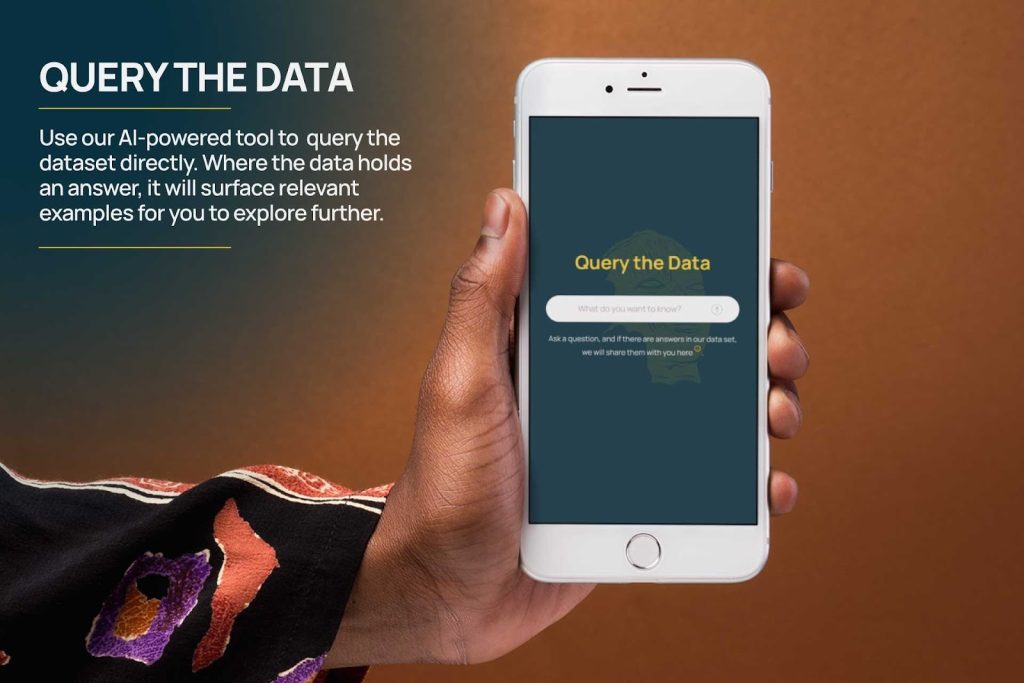
- A closed-corpus AI tool enables searches across ORA’s five-year research archive, including case studies, webinars, podcasts, and reports. Drawing exclusively from verified sources, it provides accurate, contextually grounded answers on restitution topics, from digital processes to legal frameworks and community-led negotiations.
With this launch, ORA transitions from a time-bound research initiative to a sustained digital infrastructure. The platform ensures that knowledge accumulated over six years remains accessible, supporting restitution efforts across Africa and globally.
ORA’s research and community engagement efforts revealed that restitution is complex: locating belongings can be difficult, collaboration across lines of difference is essential, and restitution often extends beyond physical return. Colonialism fractured relationships to land and heritage, and the platform situates restitution not only as the return of objects but also of human ancestors, audio archives, and knowledge systems. As restitution movements accelerate worldwide, the ORA Restitution Platform provides a shared, African-centered knowledge base, demonstrating that while there is no singular path to restitution, much can be learned from the journeys already undertaken.
ABOUT OPEN RESTITUTION AFRICA
Open Restitution Africa (ORA) is a pan-African, women-led initiative founded in 2020 by Molemo Moiloa and Chao Tayiana Maina to centralize and document information on the restitution of African belongings and human ancestors. Through the ORA Open Data Platform and research-driven case studies spanning more than 200 years, ORA equips practitioners and communities with accessible, African-centered knowledge. By elevating African leadership and lived experience, ORA reshapes restitution discourse toward accountability, equity, and community-defined processes.