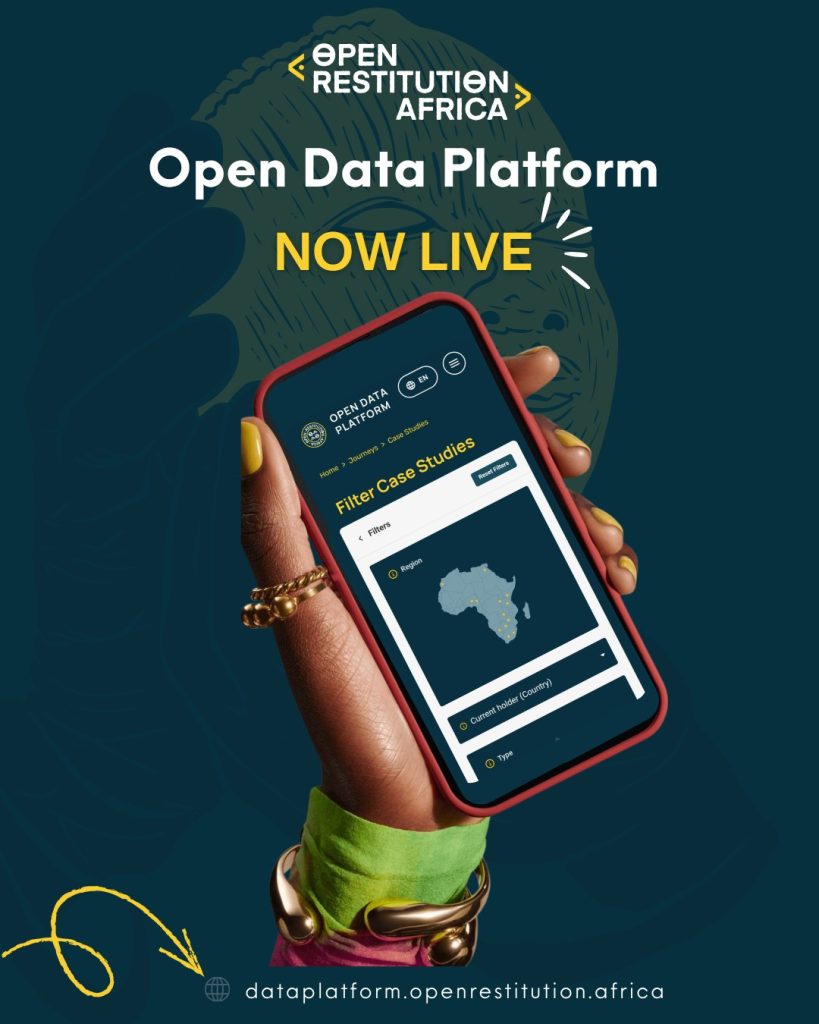

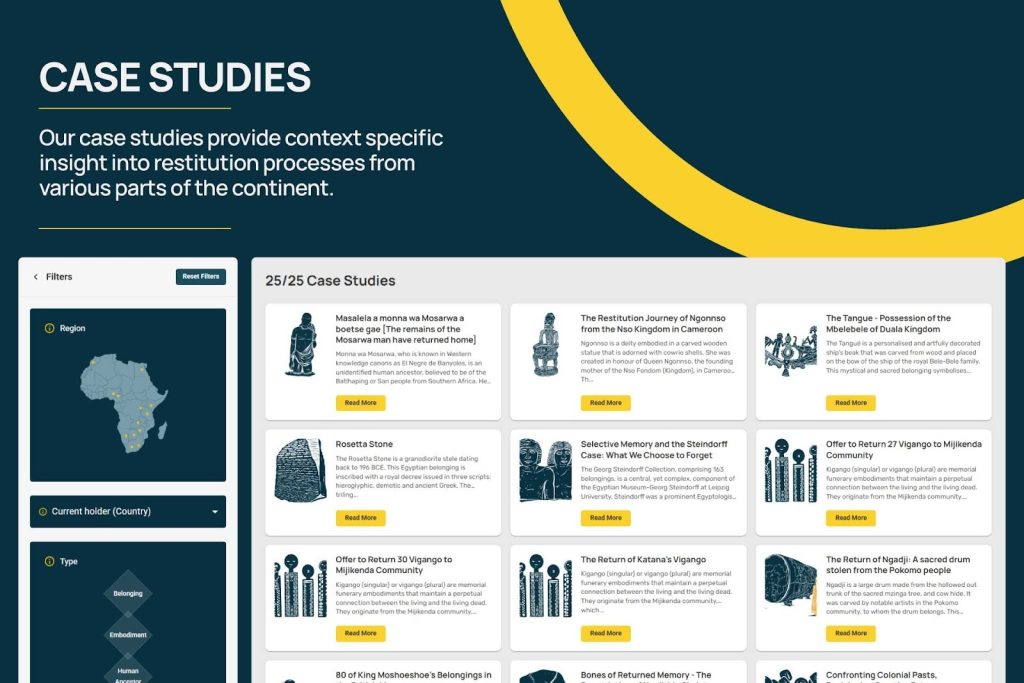
Case Studies Filter tool, one of the four core features of the Open Restitution Africa Open Data Platform, is designed to help users identify restitution case studies that are relevant to their own regional, national and research contexts through an extended filtering system and detailed in-depth case study pages.
Over the past six years, Open Restitution Africa has developed 25 in-depth case studies from 12 African countries, documenting restitution processes connected to belongings, embodiments, human ancestors and digital restitution initiatives across the continent and beyond.
How it Works
The Case Studies tool is structured around two core sections:
- An extended filter system
- In-depth individual case study pages
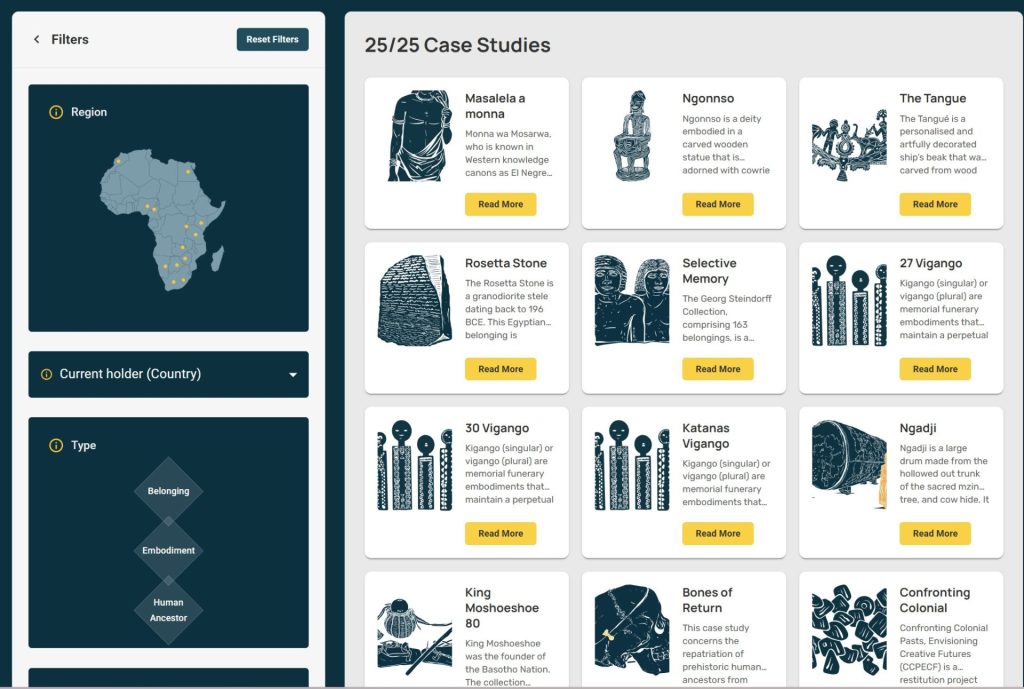
On the left-hand side of the platform, users can navigate a series of filter categories that refine and organise restitution case studies according to different contexts and forms of restitution. On the right-hand side, users can access the case studies available on the platform and move into extended individual case study pages containing detailed contextual information.
Watch the Walkthrough
This walkthrough introduces the structure of the Case Studies tool and demonstrates how users can navigate the filter system to identify case studies connected to specific countries, restitution approaches, object types and historical contexts.
Extended Filter System
The extended filter system is designed to help users locate case studies that are relevant to particular countries, restitution histories and forms of return.. Users can filter case studies according to:
- Country
- Current holder country
- Type
- Status
- Time period
- Geographical flow
- Value and significance
- Return period
- Type of return
- Approach
- Diaspora support
The tool also allows users to filter according to the current holder country, identifying where belongings or human ancestors were taken following their removal from the continent.
Further filtering categories allow users to navigate according to whether a case study involves belongings, embodiments or human ancestors, whether restitution has taken place, the historical period in which removal occurred and the geographical movement of restitution processes across Africa, Europe and North America.
Additional categories allow users to identify case studies according to the significance of the restitution process, the period in which return took place, whether restitution was permanent or digital and the approaches through which restitution efforts were initiated by individuals, communities or states. The platform also includes filters connected to diaspora support.
Dynamic Filtering
The Case Studies tool dynamically refines available categories according to selections made by users.
For example, if a user selects Kenya, the remaining filter categories will only display case studies and restitution categories relevant to Kenya. If no human ancestor case studies currently exist within that context on the platform, the human ancestor category will automatically be removed from the available filter options.
This allows the platform to continuously refine and narrow case study selection points according to the contexts available within the database.
In-Depth Case Study Pages
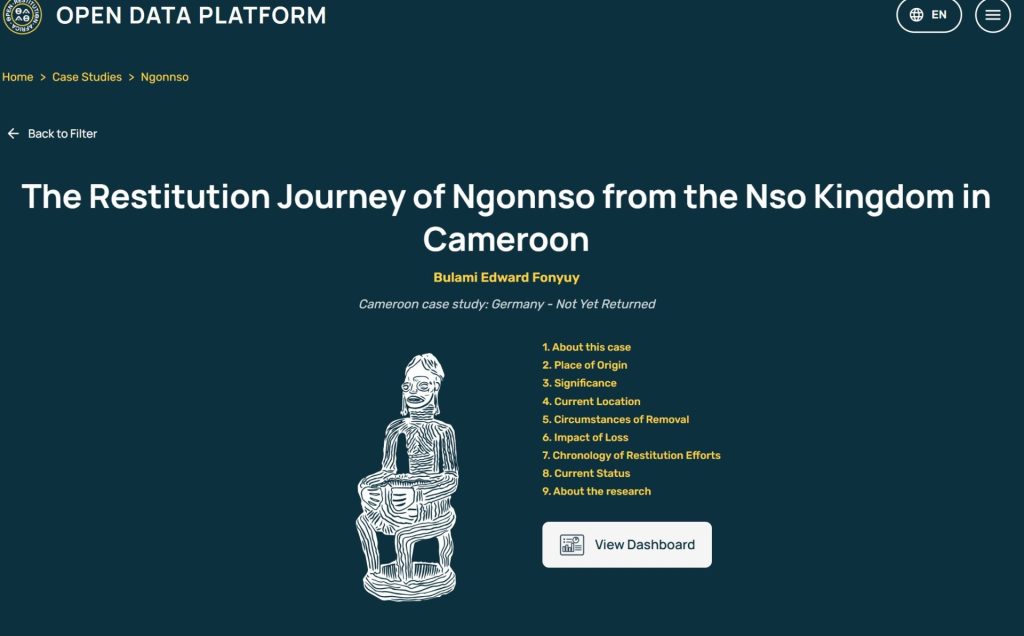
Once a user selects a particular case study, they are taken to an extended case study page containing in-depth contextual information about that restitution process.
These pages include information on:
- Place of origin
- Cultural and historical significance
- Current holding location
- Circumstances of removal
- Impact of theft and removal on communities and nation states
- Chronological restitution timelines
- Current restitution status
- Research methodologies and processes
- Contributors and researchers involved in the case study
The case study pages are designed to provide detailed contextual documentation around restitution journeys while foregrounding African perspectives, histories and research methodologies.
Accessing Restitution Knowledge
The Case Studies tool forms part of Open Restitution Africa’s broader work to expand access to restitution knowledge, documentation and research from African perspectives.
By creating multiple pathways through which users can locate restitution histories and contextual information, the platform supports researchers, journalists, students, communities, cultural practitioners and institutions engaging with restitution processes across the continent and beyond.
Explore the Case Studies tool here:
https://dataplatform.openrestitution.africa/filter
Watch the walkthrough here: