
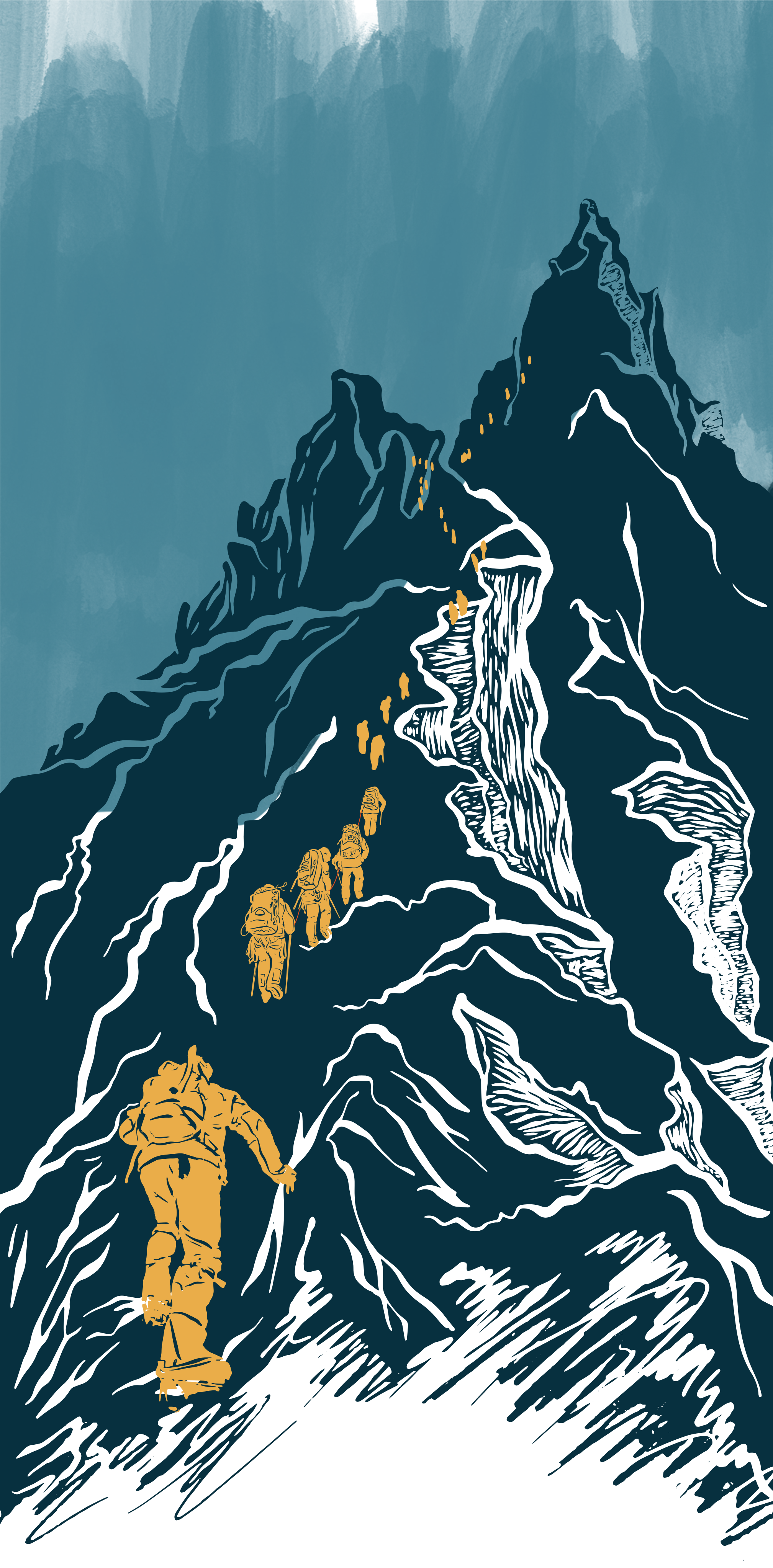
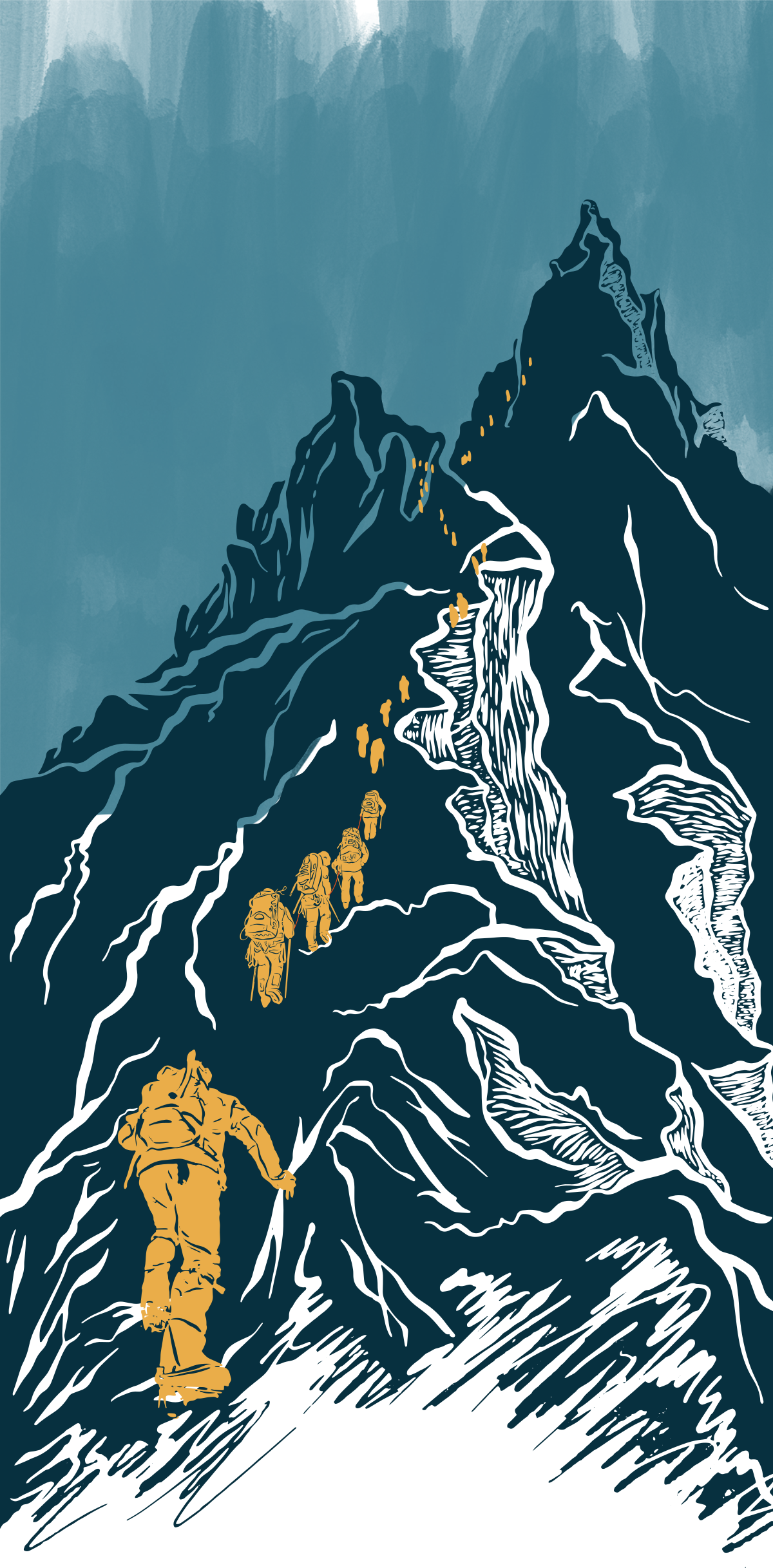
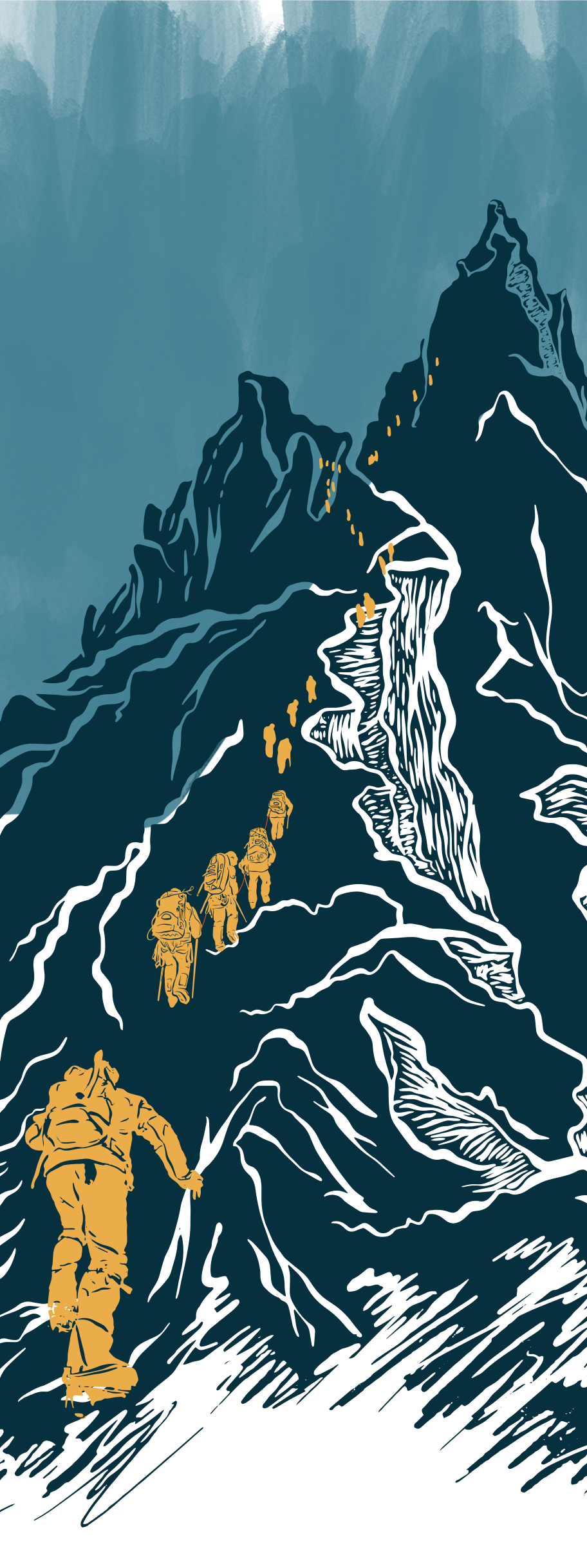

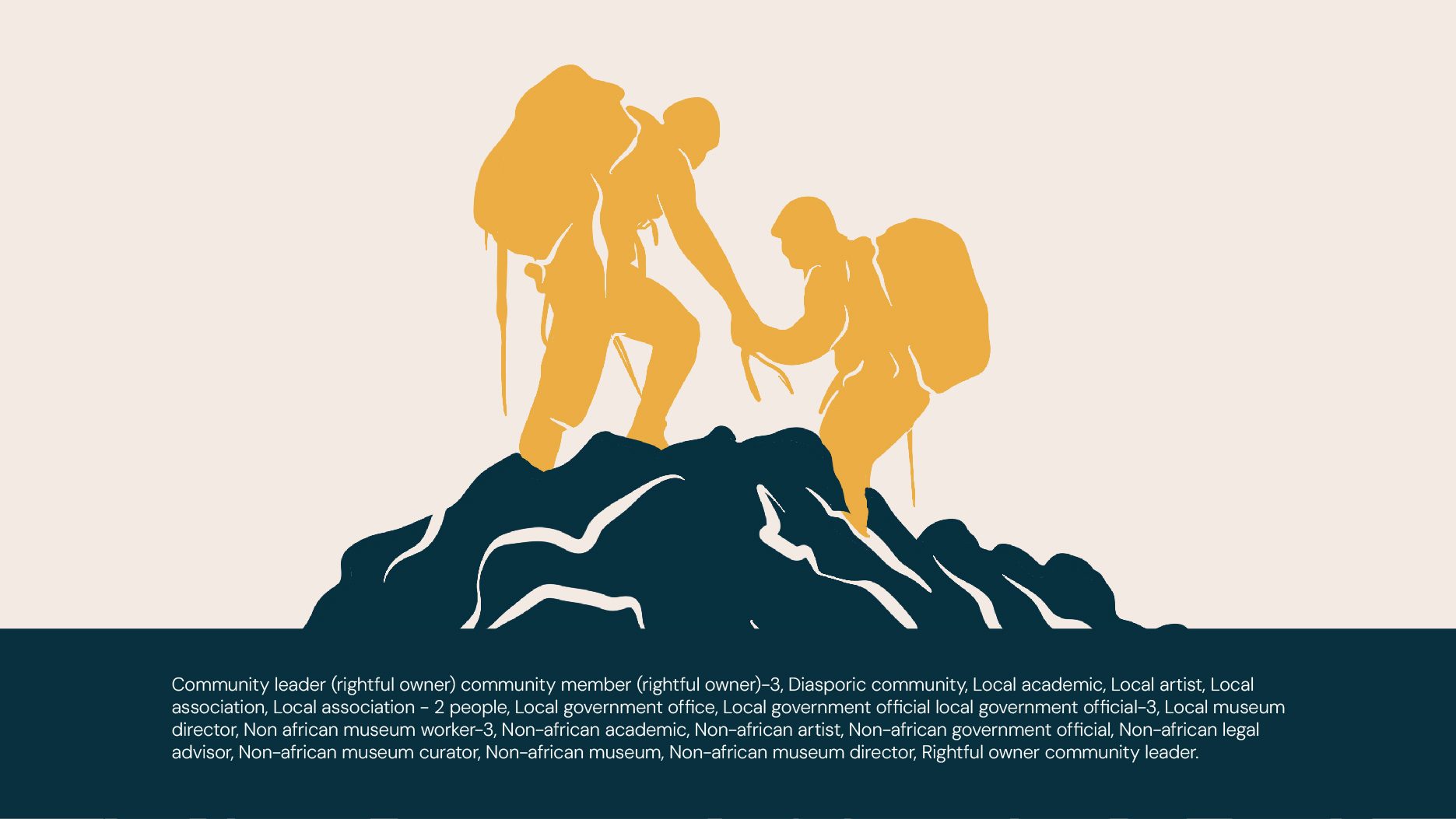
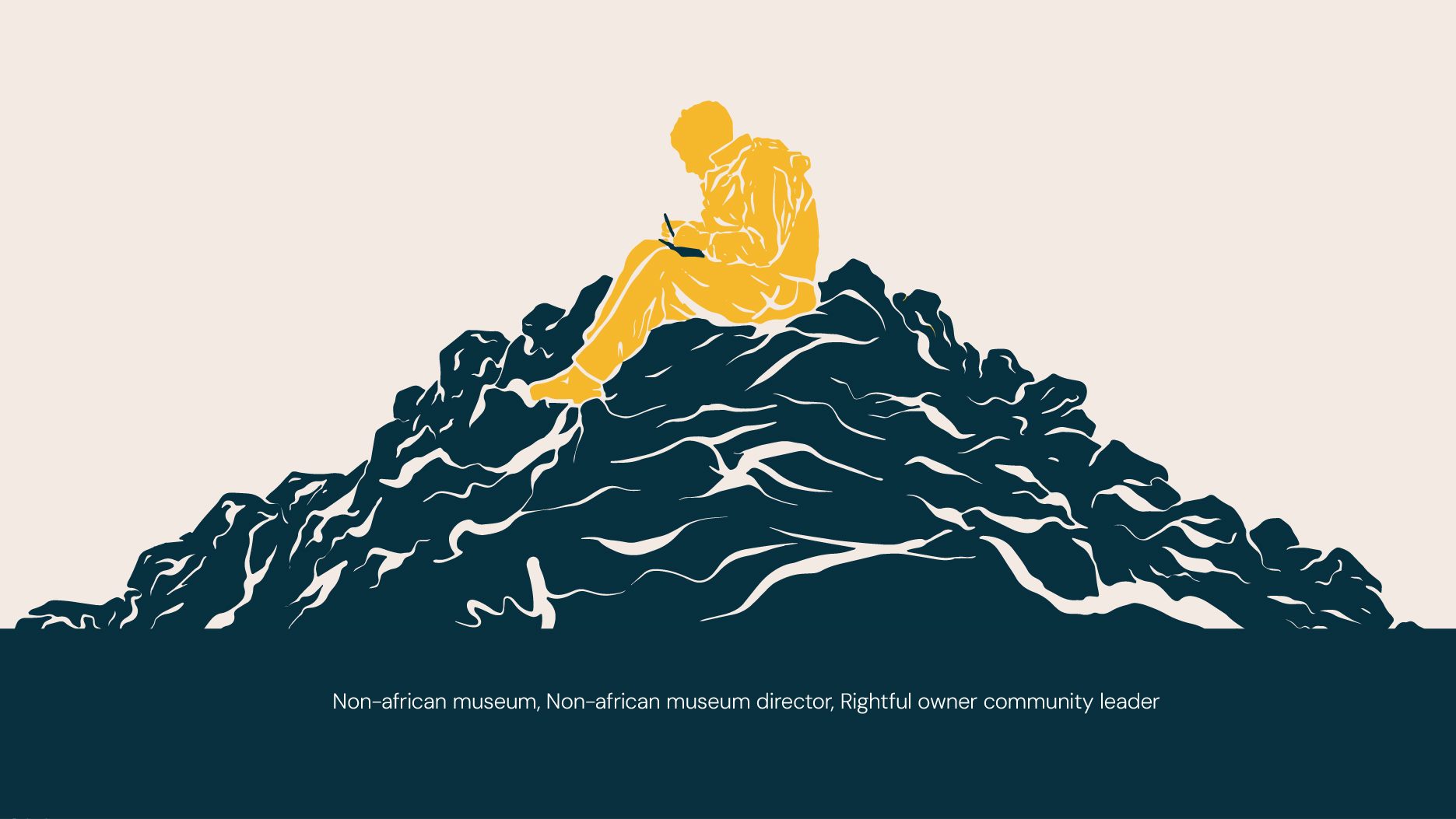
A successful restitution attempt is not unlike an ascent up a steep mountain with crazy conditions*
There are many climbers using different gear and equipment, all with the same goal.
Different cases of restitution can ofen be used as guide-maps that new researchers can use on their way to the peak.
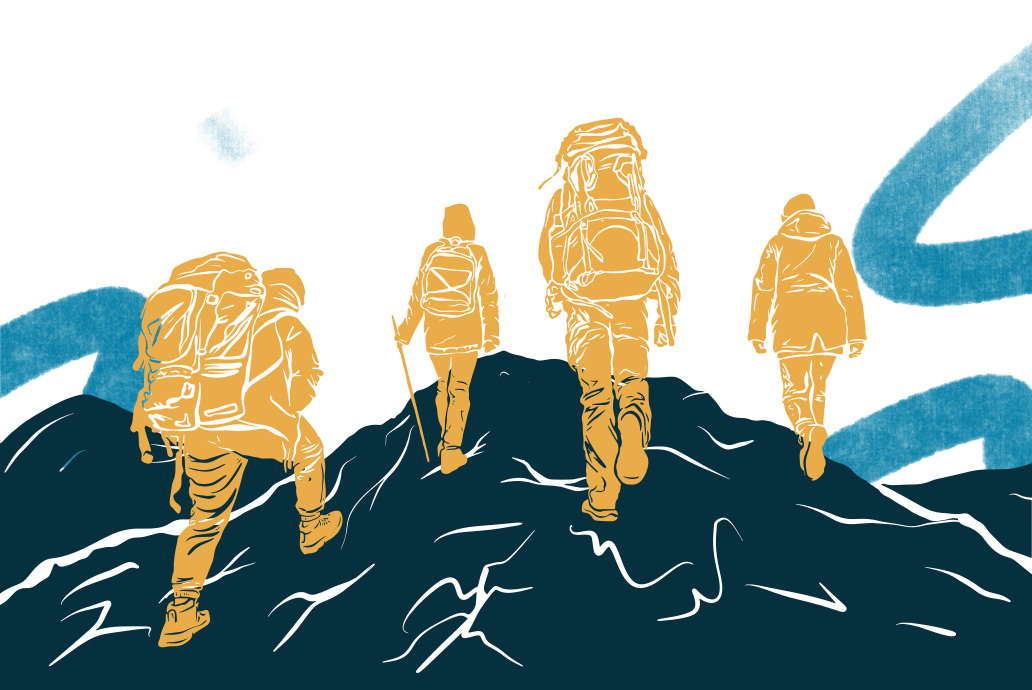
People climbing together in the restitution journey can often share the load and contribute differently, in line with their areas of expertise, leading to a successful journey.
Solo climbers in the restitution journey often have to wear many hats and do a lot ofheavy lifting to cover the same ground similar to that of collaborating groups.
As the multitude of voices climbing the mountain of negotiating for restitution grows from a few to many, significant breakthroughs happen.
Climbing Together
Success through collaboration in African Restitution Journeys
“ Les longs et difficiles parcours de la restitution africaine ”
Publié Aug 30th, 2026
If you walked into the meeting rooms of the Musée du Quai Branly – Jacques Chirac on Wednesday, June 27th, 2022, you would have encountered a sacred ceremony in progress. In the room, museum workers, government officials from Cameroon and France, artists, and community members were present as a sacred ritual procedure to transfer power from one Bamendou Tukah Mask to another took place. On one side of the room were two Tukah masks -“the fifth”, sculpted in 1916 and taken by the French during the anti-colonial wars of 1957, and “the sixth”, or “brother” mask (a replica), sculpted in 2018, in the forced absence of the fifth.
The Tukah Masks were placed on a table. The fifth was positioned on the right, elevated higher than the other to signal its status and age. From its lower positioning on the table, shiny exterior and absence of scratches and crevices, it was clear that the sixth Tukah Mask was the younger of the two. Two religious leaders, Mo’o Neboga Djeujioho Mathieux and Toulewou Jean Rene, presided over the ceremony. They walked around the table reciting prayers and incantations to appease the older mask and request that he transfer his powers to the younger mask. On the other side of the room, His Majesty Gabriel Tside, King of the Bamendou community and his fellow community leader, His Majesty Tientcheu Justin, King of Fomopea, observed the spiritual leaders’ movements with reverent attention. The Musée du Quai Branly’s chairman, Emmanuel Kasarhérou, also followed the movements of Mo’o and Toulewou.
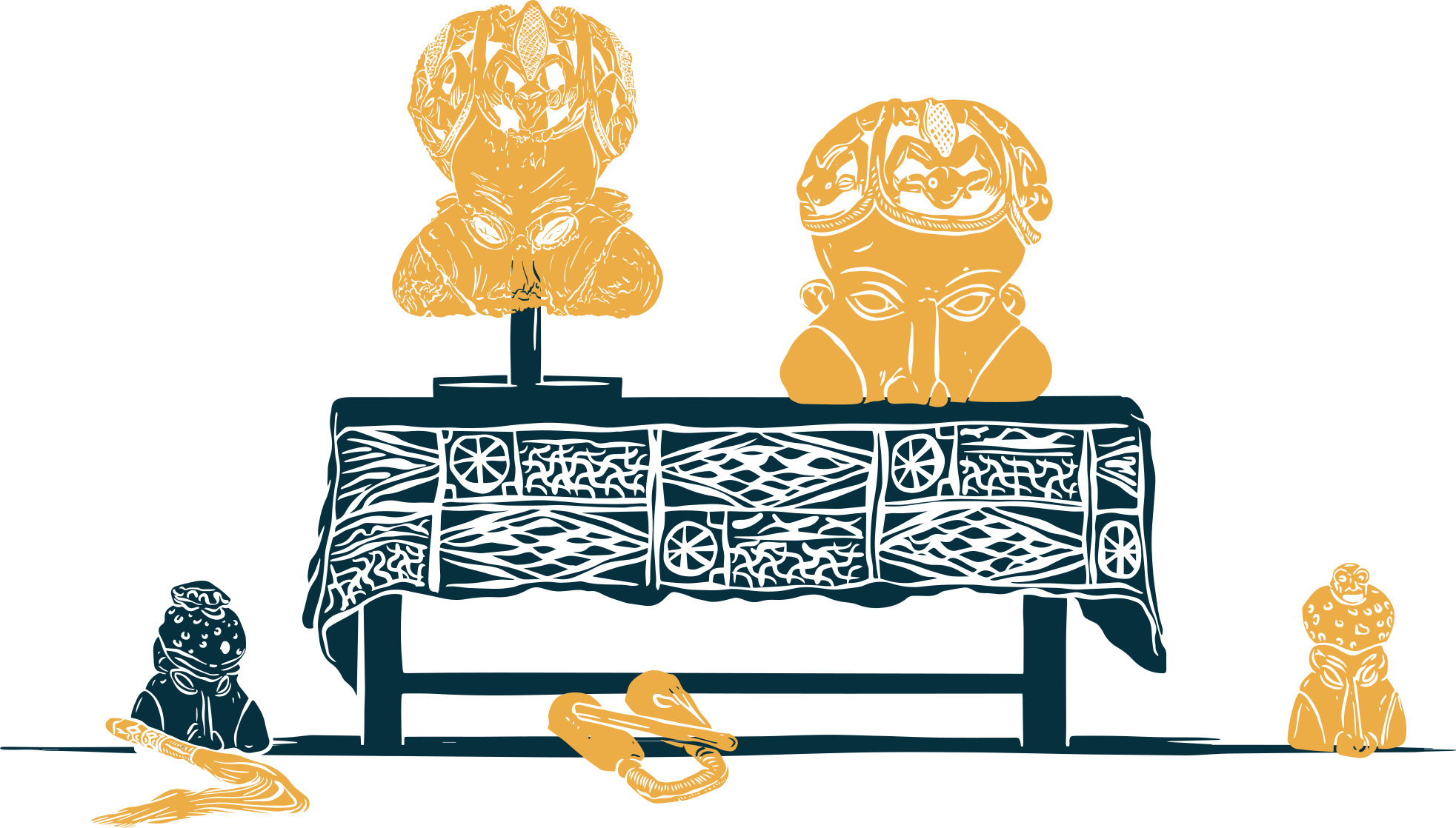
After the opening prayers, the Tukah masks were moved to a secret room, away from uninitiated eyes. Although the spiritual content of the ritual could not be revealed to many in the room, because it is part of a restricted sacred knowledge, several things are known. Various types of tree bark powder were used to place the two Masks in the comfort of the traditional power they carry; other leaves and tree branches were used to communicate with the masks; and incantations accompanied each step. After this process, King Tsidie, King Tientcheu, Kasarhérou, Moo, and Toulewou were welcomed into the secret room to participate in the ritual of transferring power from one mask to the other. After several minutes, both masks were brought out again, marking a high point in a process that had brought together community leaders and representatives, museum workers, academics, heritage experts, curators, and artists to reconnect the Bamendou community with their Tukah mask, which had been stolen from them in 1957.
The Tukah Mask is “the material representation of traditional power in Bamendou cultural life”. Bamendou is part of the ‘Cameroonian Grassfields’ in western and northwestern Cameroon, and home to 200 independent monarchies, each governed by a king. In 1957, a French doctor, Pierre Harter, secretly took the (fifth) Tukah Mask from the Bamendou palace amid deeply destabilising wars against the colonial oppressor, France. The doctor later donated his collection, including the mask, to a French museum. In 2017, the former director of the Musée du Quai Branly made a statement about the doctor’s collection of Cameroonian belongings in the Pavillon des Sessions (a permanent exhibition owned by Musée du Quai Branly) at the Louvre. Through this, the mask’s location was made globally public.
After a 61-year absence, the Bamendou community finally identified the location of their Tukah Mask. In 2018, now aware of its location, King Gabriel Tsidie, together with community representatives, requested its return to Bamendou. King Tsidie’s request for its return was denied by Louvre Museum officials, who oversee the Pavillon des Sessions. His request was reportedly denied because negotiations for the restitution of cultural belongings and human ancestors in France are conducted only between states. Consequently, Bamendou community members began gathering support amongst themselves and local stakeholders in restitution. Thus began the journey of building a coalition of voices, partnerships and collaborations that would contribute to and support the Bamendou community’s demands for the restitution of their Tukah Mask. The people who joined these efforts came from diverse backgrounds and held different roles that all came together to ensure the success of that moment, in that room, in Paris – kings, spiritual leaders, government officials from Cameroon and France, artists, diasporic and home-based community members and museum professionals. None of them could have produced that breakthrough alone.
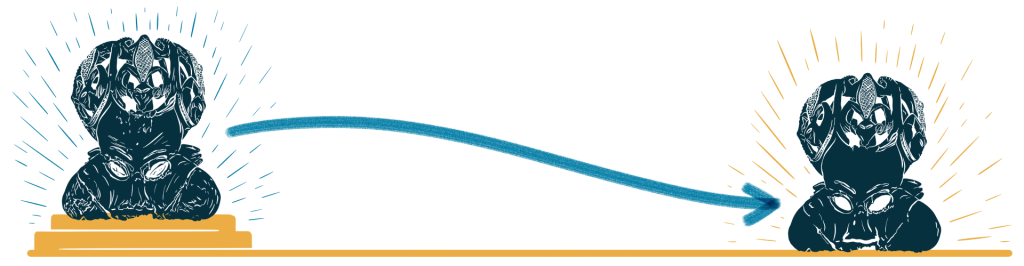
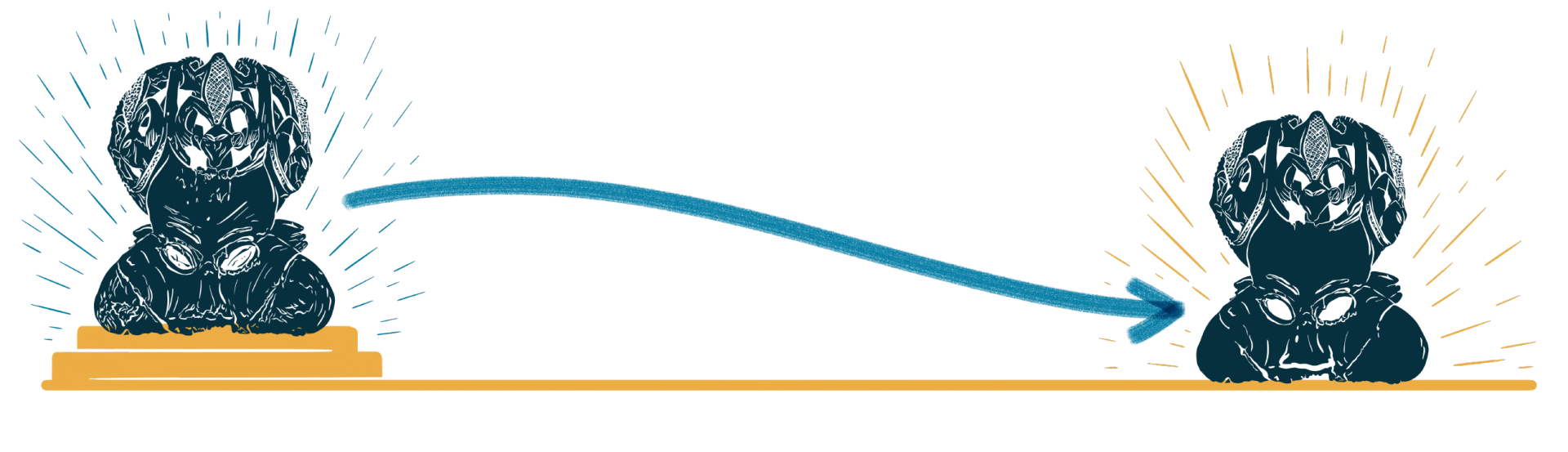
Open Restitution Africa’s case study data indicates that significant breakthroughs in restitution processes share a common ingredient – a chorus of voices comprising different actors playing different roles, who come together to work work towards repair and restoration.
Different roles of stakeholders involved in each case study
Different roles of stakeholders involved in each case study
Click to enlarge
Click to enlarge
If the sheer scale of the challenges and difficulties Africans face in restitution is like climbing mountains, then the breakthroughs that occur on a restitution journey can be compared to reaching the summit with the right group of people.

More People, More Success
Data across multiple case studies, shows that the chances of success and breakthroughs, are directly co-related with an increase in the number of shareholdes and restitution practitioners involved.
This data story follows five restitution journeys in ORA’s dataset: the Masque de Bamendou Tukah, Ngonnso, the Ngadji Drum, Hendrik Witboo’s Bible and Whip, and Tangue. It argues that successful restitution depends not simply on more people joining the climb, but on climbing together with the right rope team – a strategic combination of stakeholders who include, but are not limited to, community, academic, and government voices. It also argues that festivals in the communities of origin are vital in bringing this chorus of voices together. By reviving knowledge and practices erased through colonial theft, festivals like Bamendou’s ngim nu and Pokomo Cultural Festival, centred around the Ngadji drum reintegrate severed cultural practices even before belongings or embodiments physically return, drawing kings, spiritual leaders, community members, academics, artists, and the state into a coalition that moves a stalled demand toward the summit.
Ngonnso
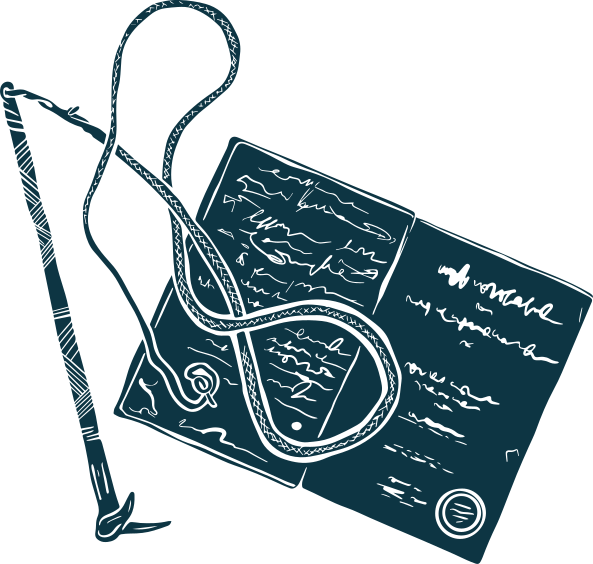
Hendrik Witbooi's Bible & Whip
This story specifically compares the contact attempts that stalled with those that advanced a demand for restitution. A pattern begins to emerge in the data:
Breakthroughs happen when different actors work together, each playing a distinct role.
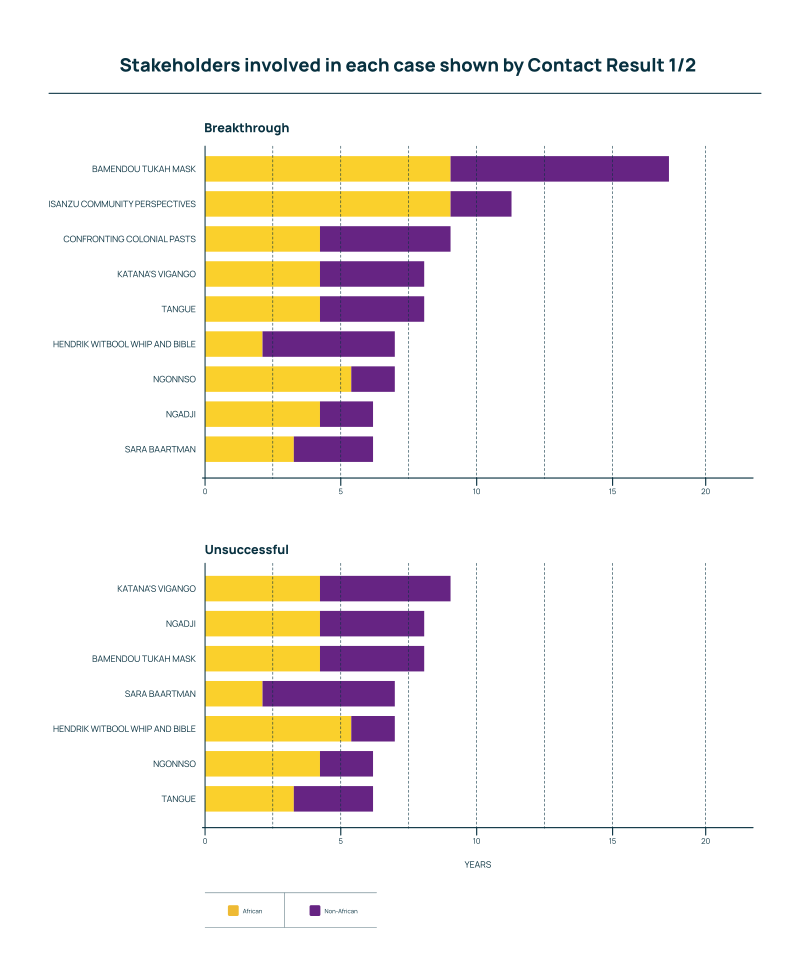
In four of the five journeys, unsuccessful attempts at contact between communities and museums transitioned to successful contact when many more stakeholders with varied roles were involved in the process. Read case by case: Both Ngonso and The Tangue, each stalled once before breaking through twice. For Hendrik Witboo’s Bible and Whip, the demand stalled twice before its singular breakthrough. For both Ngadji and Tukah Mask, the first demand was unsuccessful when fewer stakeholders were involved. When it grew to include more stakeholders with distinct roles, breakthrough in contact became a reality. As the right combination of stakeholders was added to the demand (community members, academics, spiritual leaders, museum workers and government voices), stalled demands shifted into breakthroughs.
The chart below displays the moments when contact succeeded as the size of stakeholders grew and became more varied.
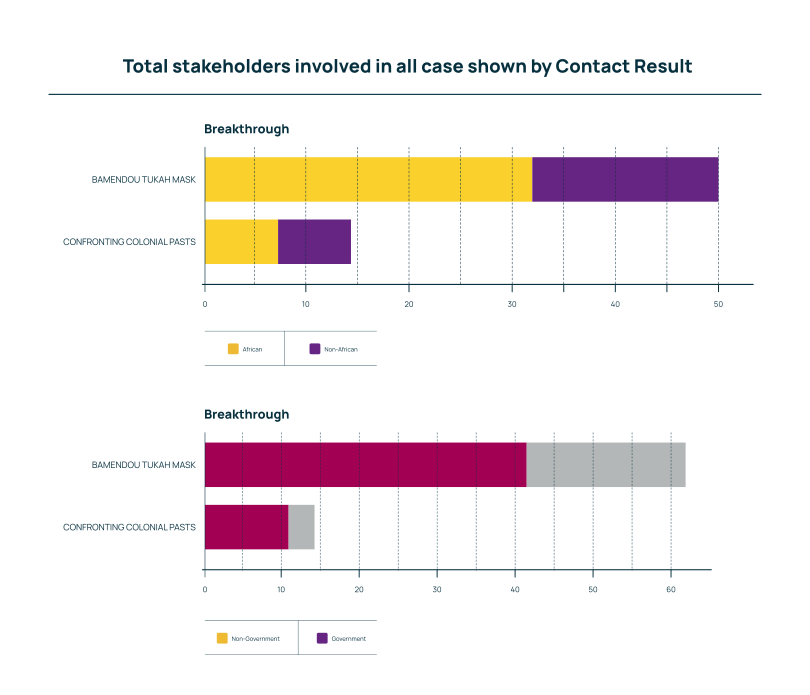
In addition to breakthroughs following a diverse group of restitution voices, these moments also have significant African stakeholders at their core – particularly academics, community members and government voices. The graph below visualises the breakthroughs that happen when Africans are involved – they anchor restitution demands and processes, as well as reintegrate lost cultural practices, within the community of origin, particularly through festivals.
An additional insight from Ngonnso suggests that it is not just about the number and size, but also about strategic collaboration with the right kinds of people. Climbing together successfully requires not just more people, but also the right rope team.
Festivals As A Form Of Reintegration In Communities Of Origin
In Bamendou, the Tukah mask was historically the main symbol of the ngim nu Festival, a community gathering that existed long before colonisation, and was held every five years. Traditionally, the king would gather all community members for cultural activities celebrating Bamendous rich heritage through the festival. The Tukah Mask was only viewed by the public at the festival or during the enthronement of a new king. When the Mask was removed from the king’s palace in 1957, ngim nu festivals were no longer held. In 2018, when the Louvre Museum denied King Tsidies request to return the Tukah Mask to Bamendou, various Bamendou artists sculpted a replacement mask, and a decision was made to revive the festival. In 2019, in preparation for the first ngim nu Festival since 1957, Bamendou academics approached Cameroon’s Ministry of Arts and Culture to request financial support. The Ministry supported the festival’s aims of celebrating Bamendous cultural heritage and provided partial funding. The 2019 ngim nu Festival brought together traditional and spiritual leaders, academics, museum professionals, artists, community leaders, local media outlets, and community members. The festival commenced with the activation of the recently sculpted sixth Tukah Mask to reinvigorate ritual practices that had been erased from Bamendou’s cultural life since 1957.
Each session throughout the festival facilitated a meeting ground for these diverse and distinct voices to remember, repair, and celebrate Bamendous tangible and intangible cultural heritage, past and present. Specifically, academics and museum workers from local institutions gave talks and lectures on the history of the Tukah Mask, seeking to re-educate members on its value and the loss it brought to the community when it was taken. Community members were encouraged to exchange ideas on supporting the traditional and local economy at the festival. Local businesses sold their products at the festival market, while media houses publicised the festival through radio and television. Additionally, sports activities and health campaigns were included in the programme.
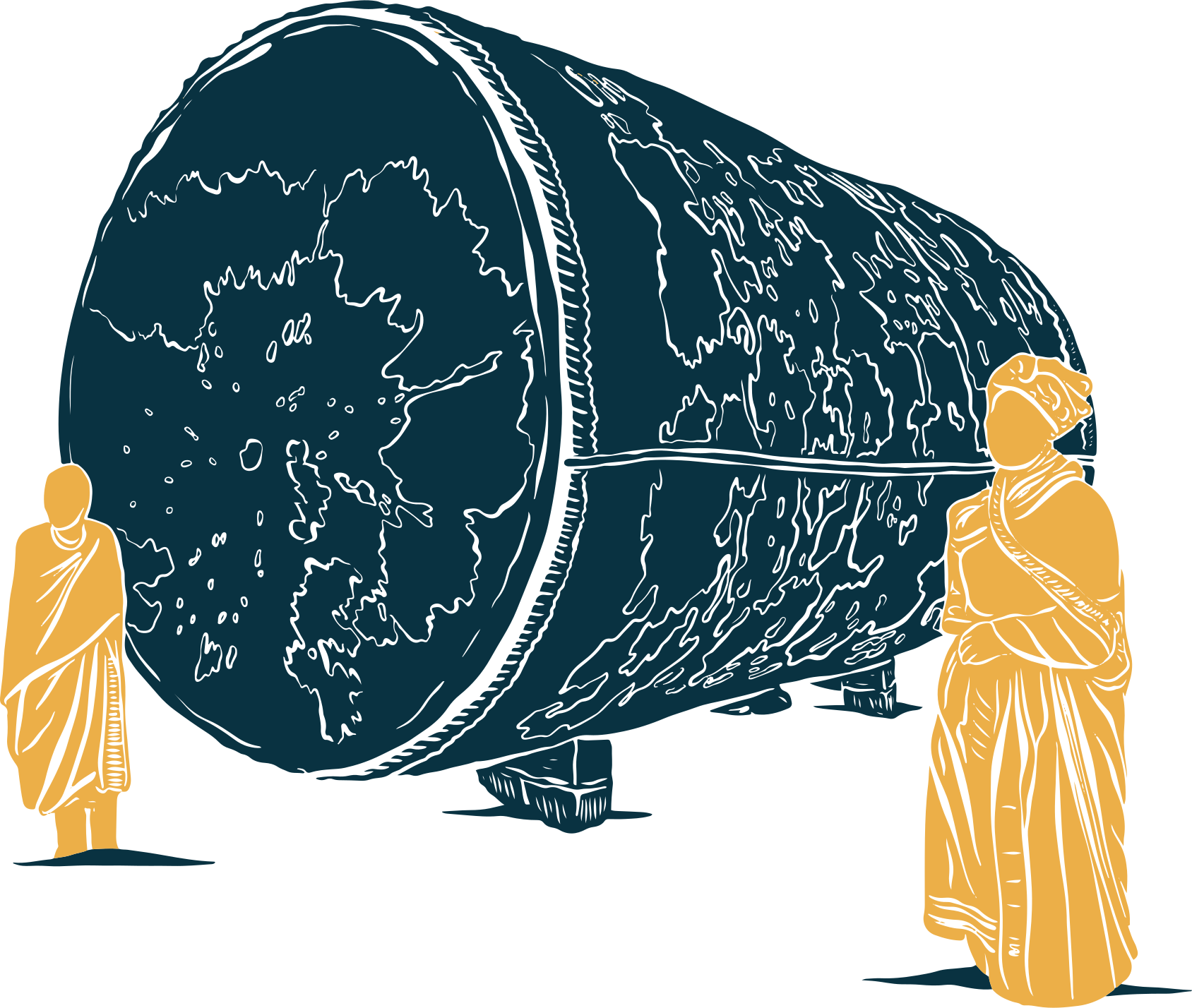
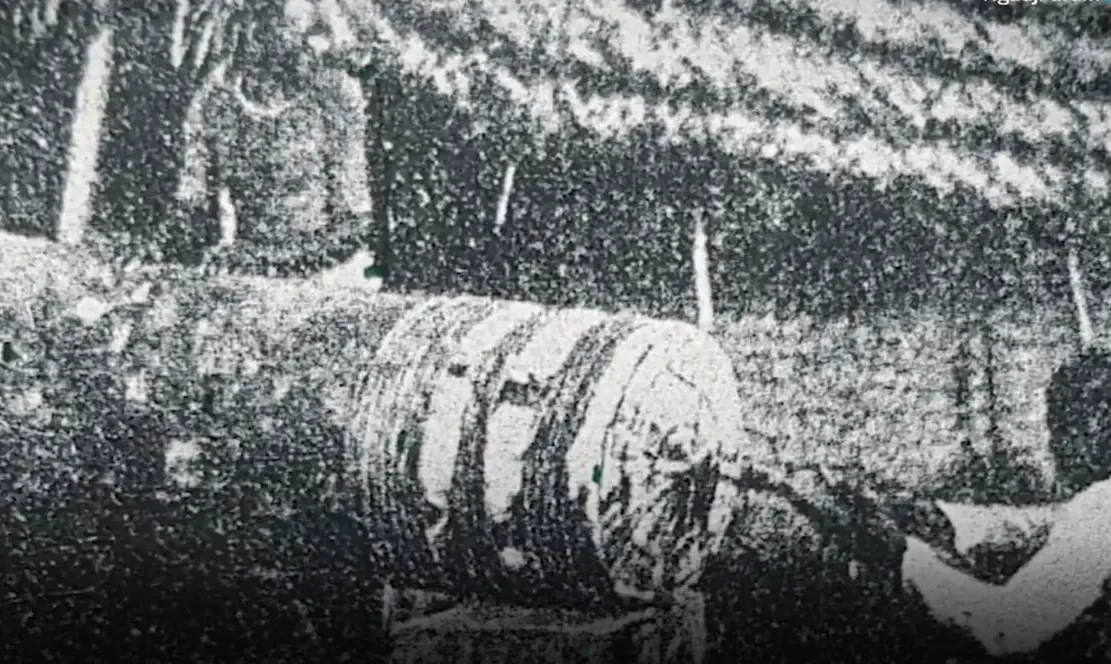
Similarly, in The Return of Ngadji: A Sacred Drum Stolen from the Pokomo People, a festival significantly revitalised, reinvigorated and reconnected Pokomo community members with the value of their stolen belonging. Ngadji is a large drum made from the hollowed-out trunk of the sacred mzinga tree and cowhide, designed to call community members for spiritual and traditional ceremonies. Ngadji was taken in 1902 during the British colonial occupation of Kenya and donated to the British Museum in 1908 by a colonial administrator. As part of the restitution efforts for its return, in 2014, Pokomo elders approached the Department of Tourism, Culture, and Wildlife Conservation in Tana River County, requesting financial support for a community festival to celebrate Ngadji. The county government accepted, and a festival was held that brought people together around the cultural significance of Ngadji.8
In three of the five journeys, academics have been pivotal in framing restitution demands in ways that reestablish community members’ connection with their cultural heritage, leading to a quicker climb to the summit in the restitution of belongings and embodiments.
Dr Martin Donlefack, an academic, activist and Head of the Technical Organising Committee for the ngim nu Festival, has been one of the key voices negotiating for the restitution of the fifth mask. In reflecting on the success of the festival, he says:
“This festival has enabled us to identify and restore many other elements, some of which were in decline and others which were in danger of disappearing altogether…The second thing is that we’ve managed to create a trigger in the minds of the Bamendou people so that from now on, they pay particular attention to their community. They are proud to take their identity and say, I am Bamendou. That’s something we didn’t see before.”
Although the 2019 ngim nu Festival was successful in reconnecting community members with the sixth Tukah Mask, anomalous occurrences that followed it resulted in most of the casualties being Bamendou community members. This confirmed to the spiritual leaders that the mask in Paris was angry for being abandoned and replaced. They said: The divinities have spoken and they say that the Tukah Mask conserved in Paris is angry. He believes that the mask ritual performed on 30th March 2019 at the festival means that his people have turned their backs on him and abandoned him in exile? 7
There are many climbers using different gear and equipment, all with the same goal - repairing cultural identities, forms of spiritual and artistic practice and indigenous epistemologies.
Accordingly, community leaders, artists, academics, and community representatives sought to communicate with the Musée du Quai Branly about arranging a meeting for both Masks in Paris.
Despite the expanding coalition of voices on the Cameroonian side, the French remained unresponsive, and a way forward was unclear. However, in early 2021, King Tsidie was approached by a Cameroonian cultural organisation, Routes des Chefferies, asking for the sixth Tukah Mask to be included in a loan of belongings that were to leave Cameroon for Paris as part of the Cameroonian Cultural Season between April and July 2022, in collaboration with Musée du Quai Branly. King Tsidie and others saw the trip as an opportunity to request a ceremony at the Musée du Quai Branly, where a transfer of powers would occur between the Masks.
Many different actors were involved at this stage, working together to enable contact between the Bamendou community representatives and the museum. Routes des Chefferies facilitated the engagement, and they were joined by the French Embassy in Cameroon, which communicated with the Musée du Quai Branly about hosting the ritual ceremony. Le Musée des Civilisations du Cameroun also joined the effort, supporting the process throughout. The Association Bamendou d’Europe, the primary organising body for the diasporic Bamendou community in Europe, committed to financially supporting the group’s transport from Cameroon to Paris. On 27th June 2022, a delegation comprising His Majesty King Tsidie, respected elders of the community, spiritual leaders, academics, and heritage experts held the sacred ceremony to transfer power from the fifth to the sixth Tukah Mask.
Upon returning to Cameroon after the ceremony, spiritual leaders advised that the transfer of power had not succeeded. The ceremony to transfer power would need to take place in the sacred forests of Bamendou. This process is still ongoing and has gained significant momentum in Cameroon.
The final graph below brings all five journeys together, showing how breakthroughs occur as the circle grows.
What the chart shows in aggregate, that no one summits alone, the Tukah Mask shows in time -between 2018 and 2022, the voices working together grew from King Tsidie to include artists, academics, community leaders, community representatives, state and non-state actors. They collectively approached restitution in ways that articulated the profound loss while also seeking to repair the harms caused by the removal of the Tukah Mask. In 2018, the demand for return with a single letter from a king and a closed door. By 2022, a rope team of kings, spiritual leaders, artists, academics, diaspora organisers, museums, and ministries had carried two masks into the same room in Paris. The summit – the successful exchange of powers in Bamendou between both Tukah Masks has not yet been reached. But the data and the story point the same way: when the right combination of voices climbs together, the mountain yields, one breakthrough at a time.
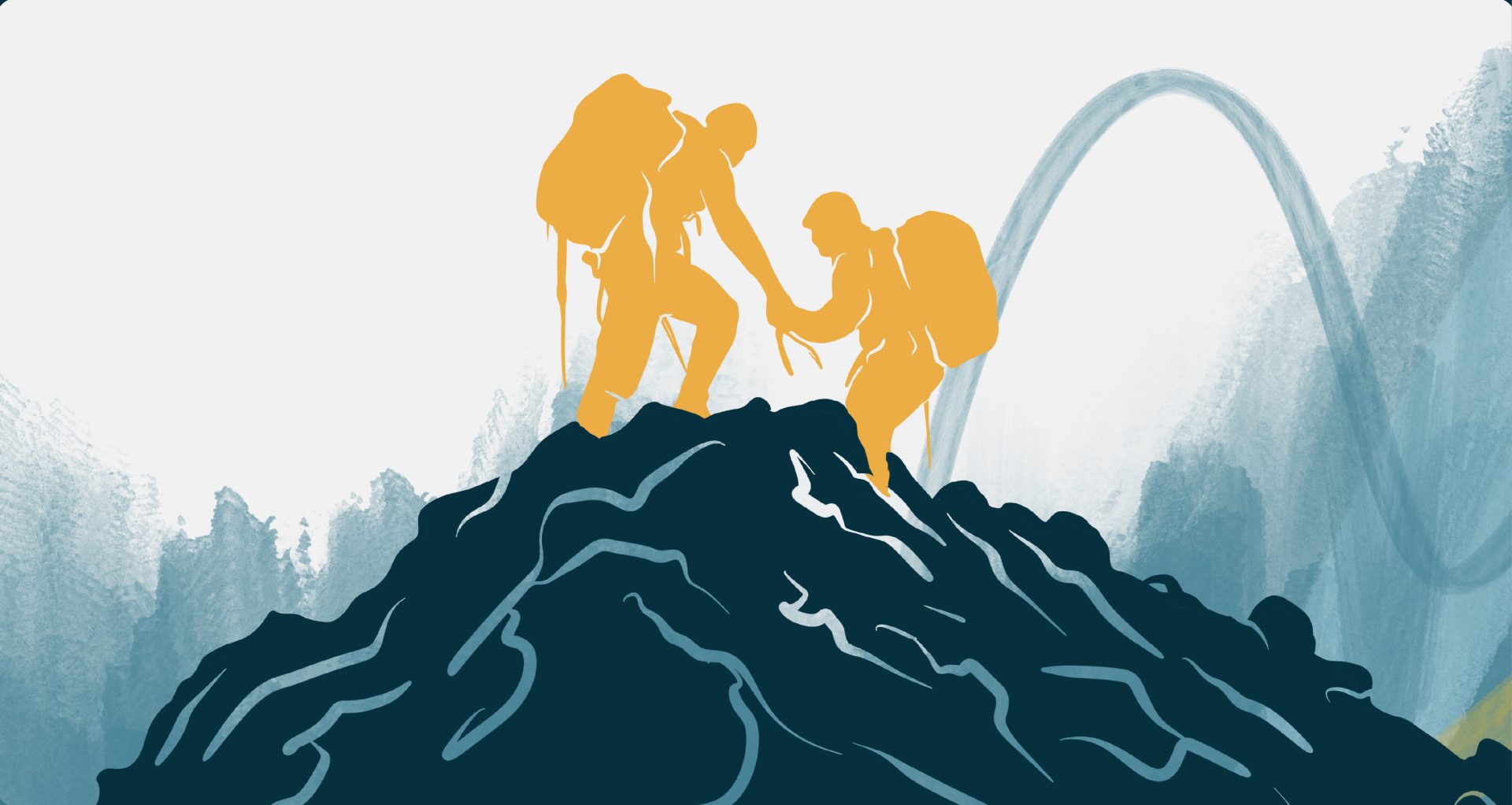
No one summits alone. But more climbers are not enough. ORA’s case study data shows that restitution advances when the right rope team comes together, and that festivals in communities of origin are pivotal in bringing together these diverse actors into a coalition that can finally lead to a restitution breakthrough.
The value of government voices in the arduous climb of restituting African belongings and human ancestors extends beyond their financial support. They are also influential because of their decision-making power. In 9/16 cases, a government voice is part of the coalition when a significant breakthrough happens in making contact with current-holder museums and collections.
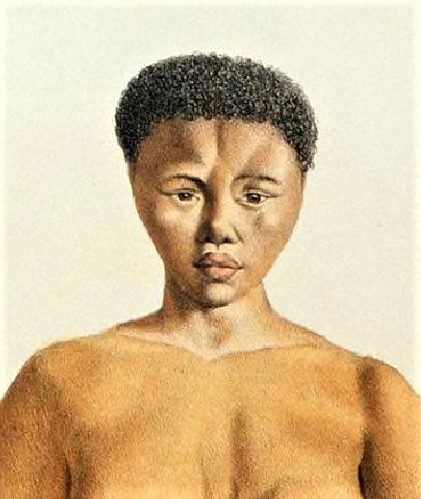
For example, in the Repatriation of Sara Baartman, a KhoeSan ancestor, a substantial breakthrough in the negotiations for her return happened in 1996—two years after South African government officials joined the chorus of voices demanding her return4. Subsequently, between 1994 and 2000, together with community leaders, community representatives, artists and academics, South African government officials leveraged foreign policy and human rights laws to negotiate with French government officials for her return5. In 2001, France signed a law6 enabling her return7. On 3rd May 2002, Sara Baartman was returned to South Africa and laid to rest on 9th August 2002 in Hankey, Eastern Cape.

These five restitution case studies reveal that breakthroughs in contact with holding institutions correlate not only with the size of the coalition, but also with its composition. Festivals help bring this chorus of voices together, simultaneously reconnecting communities to their heritage and generating more strategic partnerships that drive demand forward.
No one summits alone.
It takes the right combination of people to successfully climb together.
–
This is the second in a series of stories that emerged from 16 of ORA’s case studies on restitution processes; researched by activists, academics, curators and community members from across Africa. Visit our Plateforme de données ouvertes to dive deeper into the data on the Case Studies Page and Downloads Page.
Story by Syokau Mutonga, Editing by Molemo Moiloa & Karen Ijumba, Design by Karugu Maina.
Comparison of Stakeholders
This is just placeholder text. We will change this out later. It’s just meant to fill space until your content is ready. Don’t be alarmed, this is just here to fill up space since your finalized copy isn’t ready yet.
Donlefack, M., & Open Restitution Africa (ORA). (2026). The Restitution of the Bamendou Tukah Mask. https://dataplatform.openrestitution.africa/case-study/23.
Fonyuy, B., & Open Restitution Africa (ORA). (2026). Restitution of Ngonnso—Queen Mother of Nso. https://dataplatform.openrestitution.africa/case-study/2.
Ngome, E. N., & Open Restitution Africa (ORA). (2026). Return of the Bele-Bele’s Tangué. https://dataplatform.openrestitution.africa/case-study/3.
Rea, N. (2018, November 28). A French Museum Director Pushes Back Against a Radical Report Calling on Macron to Return Looted African Art. ArtNet. https://news.artnet.com/art-world/quai-branly-president-macron-africa-restitution-report-1404364
Tsaka, W. M., & Open Restitution Africa (ORA). (2026). The Return of Ngadji Drum. https://dataplatform.openrestitution.africa/case-study/9.
Vigne, K. H., & Open Restitution Africa (ORA). (2026). Permanent Return of 23 Belongings to Namibia. https://dataplatform.openrestitution.africa/case-study/12.
No one summits alone. It takes the right combination of people to successfully climb together.