
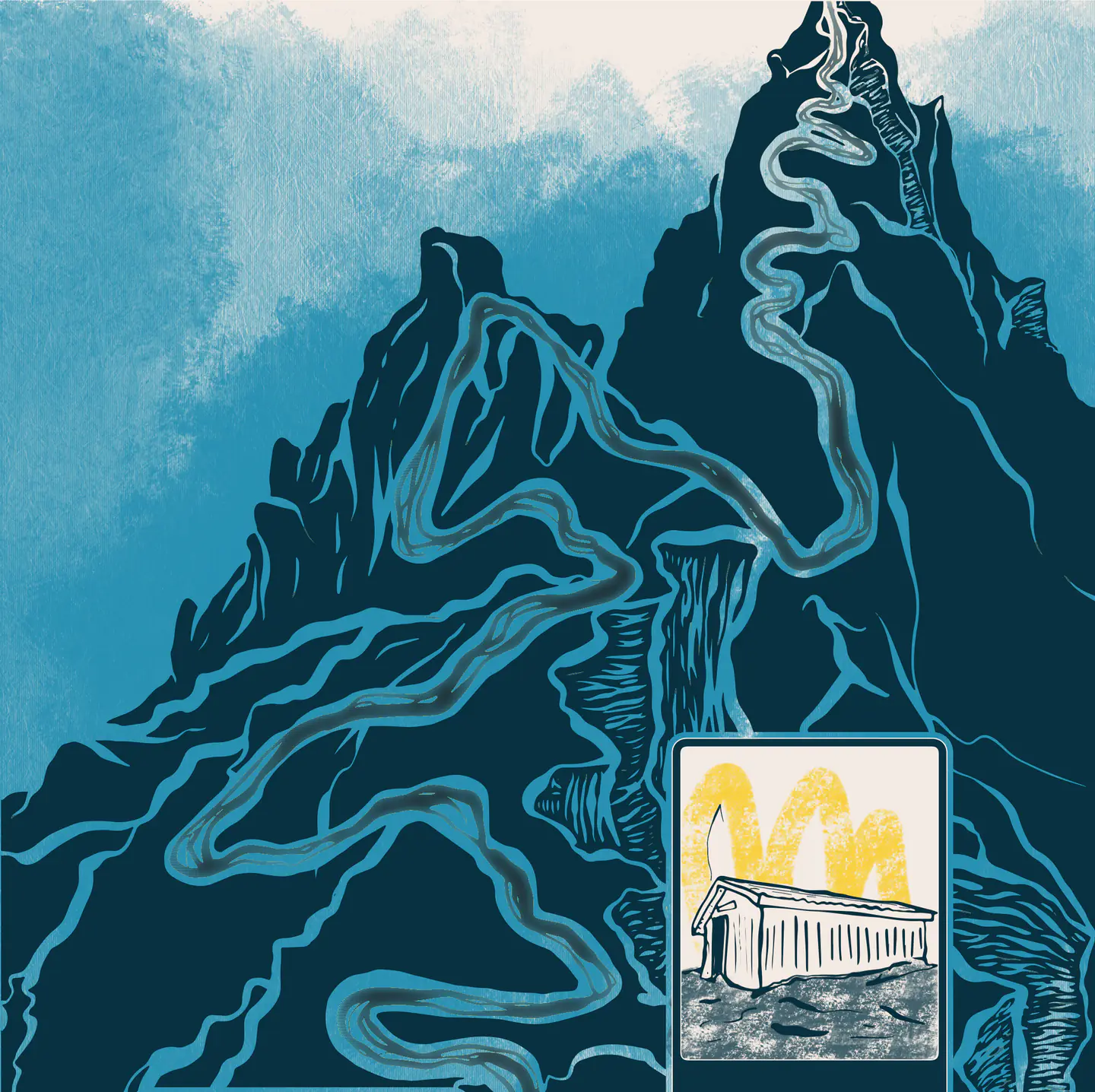
Rest & Relaxation Huts
Porters, guides and care: the support that makes summiting possible.
Climbing Base Camp
Where the crucial, unseen labour of restitution gets done.
Restitution is often portrayed as summiting – the public event of return. But just like mountaineering, there is an invisible base camp of crucial labour that remains out of view.

Climbing Beyond
The Invisibilised Journey to the Summit
Published Aug 30th, 2026
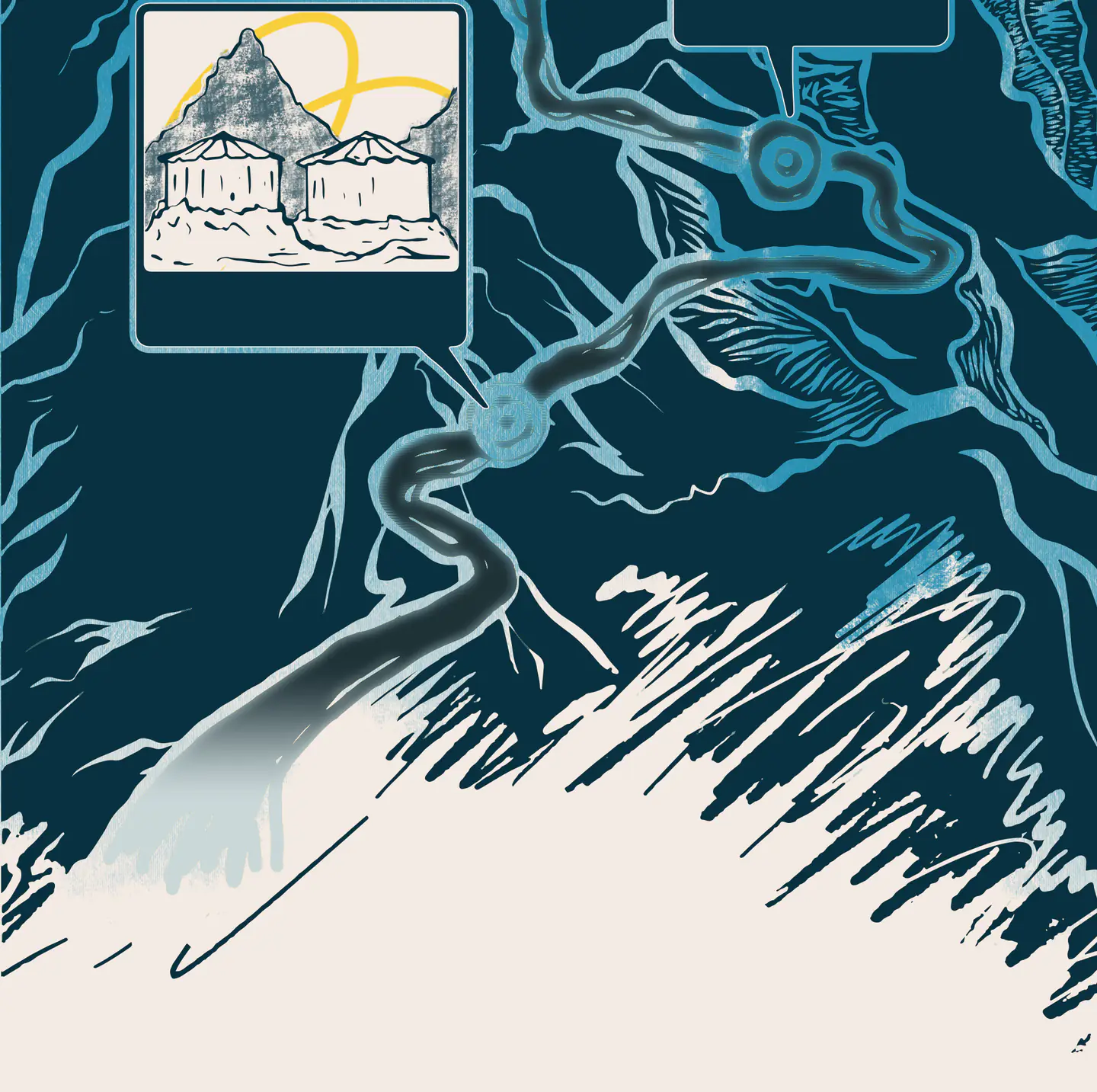
Rest & Relaxation Huts
Porters, guides and care: the support that makes summiting possible.
Climbing Base Camp
Where the crucial, unseen labour of restitution gets done.
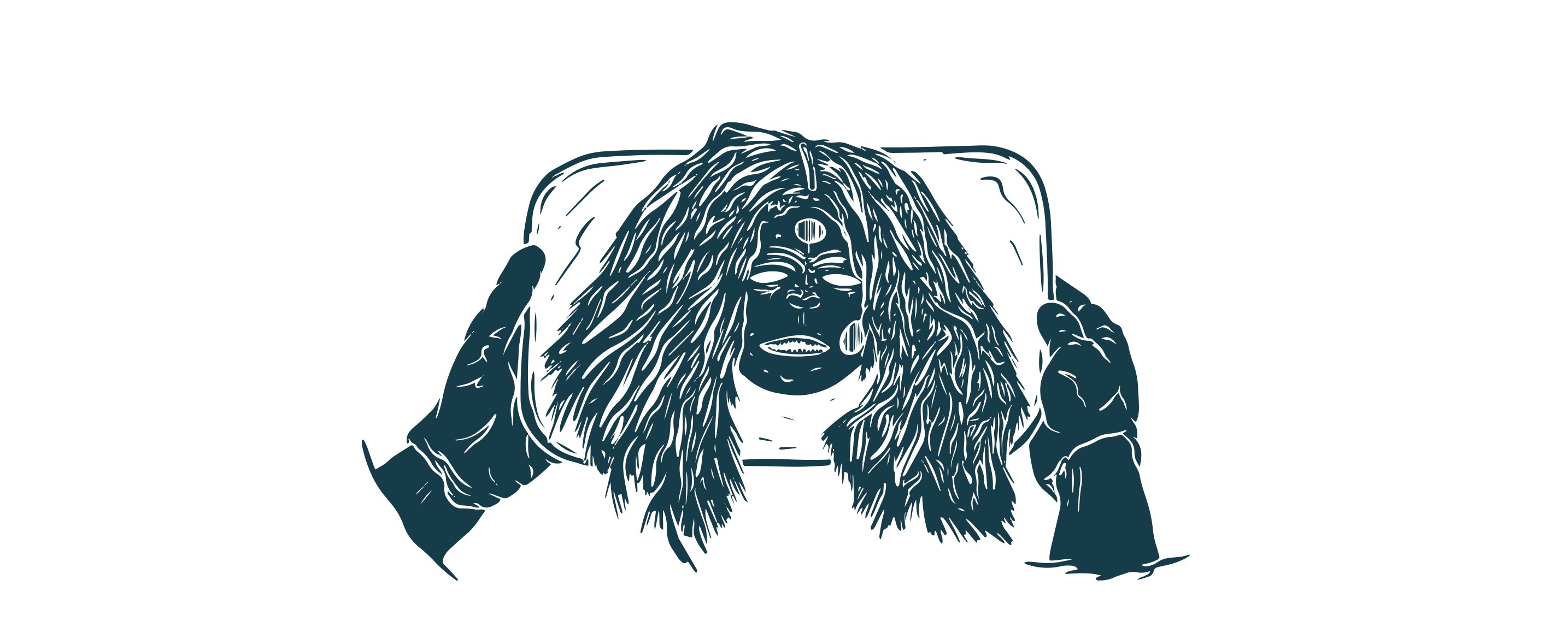
On December 6, 1996, Manyondo Mukela—then Director of Nayuma Museum in Zambia’s western province – boarded a multi-city flight from Brussels to Lusaka through London. In one hand, he carried official transport authorisation from the International Council of Museums (ICOM) and the Royal Museum for Central Africa (AfricaMuseum); in the other, a padded suitcase containing the Nalindele Mask. The Nalindele Mask originates from the Luvale community in Zambia. It is worn during their circumcision rites and rituals. When it was on display at the Livingstone Museum, it let Zambians, and especially the Luvale, stay connected to this heritage and the knowledge it carries.
When it was stolen from the Livingstone Museum in 1989, that connection was severed. Proactively working to mobilise international networks for its return, Zambian curators immediately reported the theft to Interpol and shared photographs across ICOM, AFRICOM, and UNESCO. This awareness-raising effort led directly to the Nalindele Mask being featured in ICOM’s 1994 publication, Pillages en Afrique : Cent objets disparus.
When a Chilean art dealer read the publication and realised that the cultural belonging he had purchased at an auction was stolen, he immediately turned it over to Belgian police. A swift chain of custody followed: from police to Zambian Ambassador to Belgium Isiah Chabala, and then to the Royal Museum for Central Africa in Tervuren for safekeeping.


But getting the Mask all the way back home was another story. With no formal state funding or government resources allocated for its recovery, the return of the Mask became an act of sheer, dedicated human labour. It was driven by Zambians willing to go out of their way to safeguard Zambia's cultural heritage. Nothing obligated Mr Mukela to make the trip from Paris to Brussels himself. After a quick conference with fellow Zambian cultural workers, amidst attending an ICOM board meeting in Paris, he chose to detour to Tervuren, on the outskirts of Brussels, to collect the Mask in person before continuing home to Lusaka.
Upon landing in Lusaka, he was met by a delegation organised to receive him and the Mask from the National Museum Board. The team was led by Professor Francis Musonda, a veteran archaeologist who had contributed extensively to the Livingstone Museum’s collection and to Zambia’s restitution strategies. Together, they handed the Mask over to Amusa Mwanamwamba – the Minister of Tourism, who is also the official custodian of national heritage – who took charge of arranging for the Mask’s return to the Livingstone Museum. When the Mask arrived, the toll of its displacement was clear: parts of its plant-fibre hair were missing, and its original accession number had been scraped off to hide its origins. Museum curators worked tirelessly to physically repair what they could, re-cataloguing it under accession number 11999 so it could once again be displayed for the public.
The handover event brought together museum workers, government officials, and local Luvale community members, who celebrated the return of the Mask with traditional dances and performances, supported by commemorative postcards sold at the museum shop. At a time when President Frederick Chiluba’s administration had actively pushed to amend the constitution and declare Zambia a "Christian Nation"—an environment largely hostile or indifferent to indigenous spiritual heritage—these efforts moved against the grain to ensure the cultural traditions embodied by the Nalindele Mask were enlivened and reintegrated into society.

Meanwhile, across the ancient green canopy, another fight for return was unfolding. In 1991, Dr. Alphonse Arcelin—a doctor and city councillor of Haitian (African) descent—encountered the taxidermied body of an unidentified African human ancestor on display at the Darder Museum of Natural History in Banyoles, Spain. Outraged by the display, Arcelin launched a six-year campaign demanding that Monna wa Mosarwa, the ancestor on view, be removed from the museum and returned home. Better known by the Spanish name of El Negro de Banyoles, Monna wa Mosarwa is an unidentified human ancestor from Southern Africa. Dr. Arcelin wrote letters to the local mayor, but encountered resistance from the Catalan community, who considered the exhibit a cherished cultural icon distinguishing them from broader Spain. Ahead of the 1992 Barcelona Olympics, Arcelin seized the international spotlight, rallying Black athletes like Magic Johnson and prominent global figures like Jesse Jackson and Kofi Annan, who raised threats of a boycott. While media attention surged, Monna wa Mosarwa remained on display.
The turning point came in 1997, when Kofi Annan became Secretary-General of the United Nations. With Annan amplifying the cause, international pressure mounted, forcing Spain into intensive negotiations with the UN, UNESCO, and the Organisation of African Unity (OAU), which ultimately led to the removal of Monna wa Mosarwa from display. With confusion swirling around whether Monna wa Mosarwa was from the San or Batlhaping people from Southern Africa, debates ensued around where he should be returned to – Namibia, South Africa or Botswana. Once Botswana was chosen as his final resting place, a national restitution reference committee comprising representatives from the Ministry of Foreign Affairs, the Gaborone City Council, the University of Botswana and the San community prepared for his return using Batswana state resources. On October 4, 2000, Monna wa Mosarwa’s skull and bones arrived in Gaborone by air in a coffin—marking the first repatriation of a human ancestor to Botswana and one of the earliest on the African continent. Around 10,000 people lined up to pay their respects as his remains lay in state, before he was buried the following day in Tsholofelo Park, a site declared a national monument.
Public concern over the condition of his grave grew over the years, leading to the burial site being re-declared a national monument under the Monuments and Relics Act in 2006. This transferred custody to the Botswana National Museum, ensuring proper signage, care, and educational context. Today, a decorative chain-link fence in Botswana’s national colours (blue, white, and black) marks his resting place, while the question of whether he was buried in his precise ancestral land remains unanswered; the truth locked away in Catalan medical records in Banyoles, Spain.

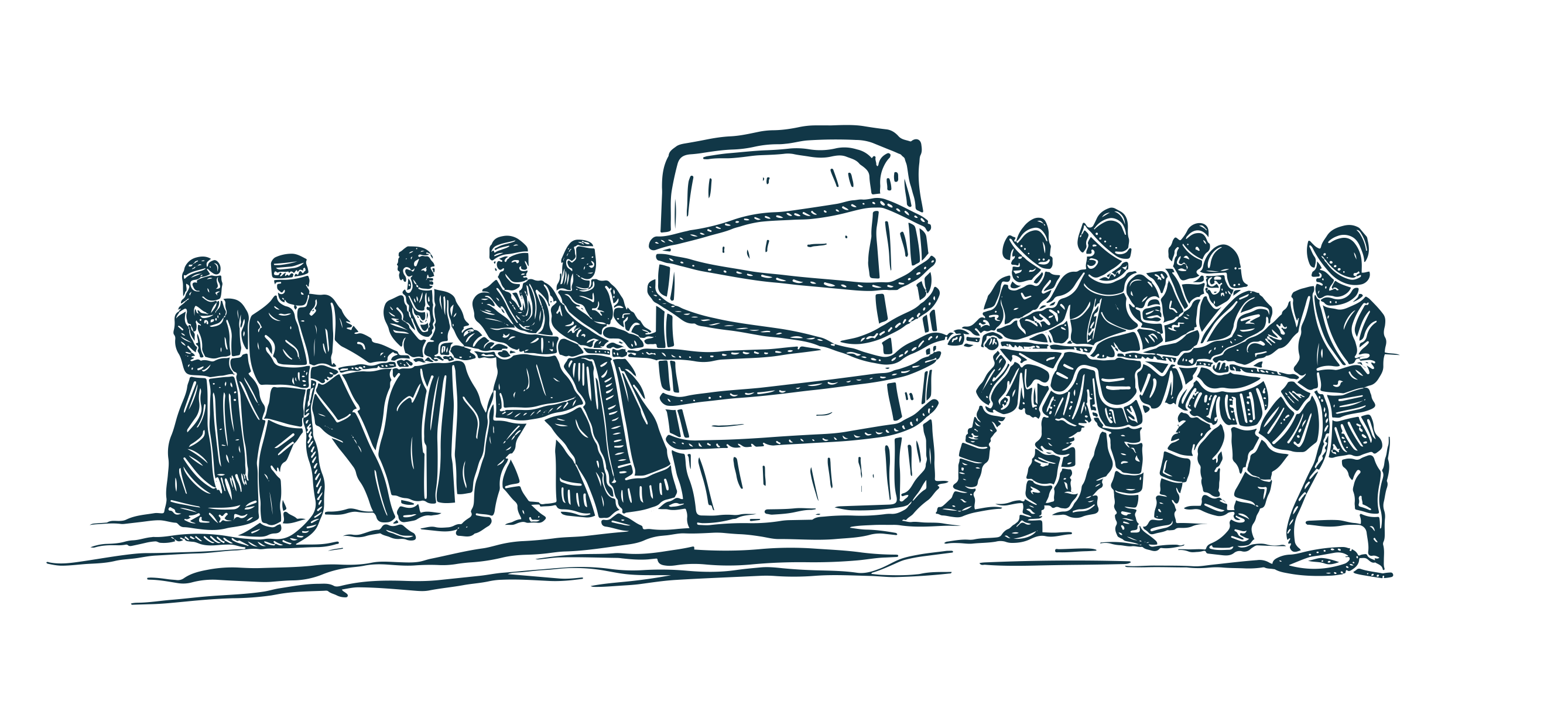
The labour of restitution, especially the negotiations in African countries to facilitate return, as well as what continues after the event of return, is arduous, demanding and hidden from sight. This vital work of repair, restoration, and transitional justice enables reconciliation, reconnection, and pathways to new African futures. It is hidden labour spearheaded by Africans – and those of the African diaspora – and is similar to the unseen work of navigating hidden crevasses or sudden weather changes while summiting a mountain. Some of the reasons for this invisibility are a lack of centralised and accessible documentation about Africans’ role in this work, a limited understanding of restitution as only being the event when a Global North country returns what was taken to an African country, and a focus on the performance and speed of restitution rather than a longer journey comprising multiple steps, roles and turns. In essence, the demand for the return of African ancestors and belongings means, in large part, a commitment from Africans to do profoundly difficult, never-before-done work.
After an ancestor or belonging is packed in a box and returned to the continent, Africans must do the work of reintegrating, repairing, and restoring it in the current context.
Open Restitution Africa’s case study data shows that in processes involving engagement with the community of origin, the most involved stakeholders are usually local government officials, local museum directors, local academics, and community members, all of whom are African. Not surprisingly, it is also local government officials, local academics, and community members who are most involved in processes of reintegrating belonging(s) and human ancestor(s) back into their communities of origin. This story draws on six case studies from ORA's dataset. Each involves belongings or human ancestors that have been physically returned. By studying the steps and turns taken across these cases, we aim to make visible what it takes to climb the mountain of restitution. In particular, we focus on the roles Africans in restitution have taken beyond their formal duties. They are the people who spend the most time and labour in a "complete" restitution journey. Much of the work they do is multi-layered and largely unpaid. Physical return, the data shows, is a milestone, not an endpoint. The work continues long after.
Chart 1Stakeholder Types Involved in Restitution Work Over Time
This visualisation tracks stakeholder type involvement across ORA’s six selected case studies of restitution journeys. Circular node size reflects the number of stakeholder types involved, while colour denotes the process being undertaken. The chart illustrates that restitution work is non-linear, long-term, collaborative labour that unfolds over time.
The crucial labour that continues after the commitment to return reveals that Africans in this work go beyond their job specifications. This reality is not just limited to the return of the Nalindele Mask. The pattern holds across other cases. Akin to the mountaineer who spends as much time walking downhill in order to make it to the summit, the work done by Africans in these restitution journeys is often unseen by those watching the climb from afar. Accordingly, these Africans multitask as policy experts, conservators, artists, educators and museum professionals. When Dr Purity Kiura, then Director of Antiquities, Sites and Monuments at the National Museums of Kenya, supported the restitution of vigango to Kenya, she went beyond her remit as a museum worker. She took on the logistical labour of advising the Denver Museum of Nature and Science regarding Kenya’s national restitution protocols and policies. Concurrently, on the Kenyan side, she leveraged the Finance Act of 2018 to allow for the return of the vigango while bypassing import tax. After the physical return of the vigango to Kenya, she was also involved in the reintegration ceremonies and negotiations for their final resting place in Mombasa.
Africans working in restitutionary work wear different hats that go beyond their job descriptions. They are building novel processes for restitutionary work as they go along. These processes are vital forms of knowledge and best practice that can guide others beginning their own restitution processes.
In Tanzania, the restitution of human ancestors to Kilwa followed a similar path. Dr Emmanuel Yacobo, director of the National Museums of Tanzania (NMT), was the main contact person for the repatriation. He was informally approached at a conference by Dr Kennedy Gitu, who is the country director of the British Institute in Eastern Africa (BIEA), about returning the human ancestors in BIEA’s storage. Yacobo supported the BIEA as they itemised and catalogued the collection in Kenya before they were returned to Tanzania. He also assisted in applying for the necessary permits needed to transport the human ancestors back to Tanzania. And when customs officials at the Kenya/Tanzania border in Namanga needed a point person to allow the return to Tanzania, he happily served as the proxy for Tanzania’s Ministry of Tourism – all responsibilities well beyond his remit as a museum director. Dr Yacobo is presently also developing the plan for the return of the human ancestors to their communities of origin in the mixed-heritage region of Kilwa, Tanzania.


This simultaneous management of different strands of restitutionary work stays consistent beyond Kenya or Tanzania. A similar pattern is seen in the other cases in ORA’s dataset. During the negotiations for Sara Baartman’s repatriation, Brigitte Mabandla, then the Deputy Minister of Sports, Arts and Culture, was tasked by the South African president to establish a reference group to support restitution efforts. She liaised with this group to leverage the combined expertise of KhoeSan community members, government officials, legal experts, activists, museum professionals and academics to map Baartman’s route back home. These negotiations were pivotal in facilitating the processes that laid a strong argument for South Africa’s ambassador to France to make a demand for the French government to repatriate Sara Baartman. Mabandla was also part of the logistical team that travelled to Paris to receive and return Sara Baartman’s skeletal and soft tissue remains from Paris. Upon Sara Baartman’s return to South Africa, Mabandla was also responsible for leading the proper memorialisation of Sara, including building a burial site in the Eastern Cape.
Chart 2African Restitution Stakeholders | Participation Beyond v Within Professional Remit
This chart visualises the participation of African stakeholders who appeared most frequently in each of the six restitution journey case studies. Colour-coded ribbons connect stakeholders to the specific processes in which they were involved. This chart illustrates how Africans are consistently called to perform extensive labour beyond their official professional remits.
This provides insight that the bulk of restitutionary work is spearheaded by Africans. They take on the survival chores of summiting the mountain – unglamorous paperwork, logistical coordination, community reintegration and other such tasks – going beyond their job specifications. They also remain present throughout the restitution journey, often taking on multiple roles and responsibilities. Their willingness to wear many hats is what facilitates negotiations with Global North leaders and museum professionals, navigates and circumnavigates policy and legal protocols in their countries and institutions, and also finds the language to reintegrate, reeducate and reinvigorate the cultural norms, practices and ways of life that were lost when these ancestors and belongings were taken.
African demands for the return of their heritage signify a commitment on the part of Africans to do profoundly difficult work.
ORA’s data consistently highlights that people—the dedicated human resource—are the primary drivers of meaningful restitution. Breakthroughs happen when you have the right team on the ground. However, relying solely on passion isn't enough; restitution is an expensive, often unpredictable endeavour, and Africans doing the restitution work frequently lack the necessary financial buffer. For instance, the return of the 30 Vigango to Kenya nearly stalled because of import taxes. Dr Purity Kiura had to leverage the Finance Act of 2018 to bypass these costs, as neither the Denver Museum of Nature and Science nor the National Museums of Kenya had funds for them. Similarly, the return of Sara Baartman required the Department of Arts, Culture, Science and Technology to allocate R 8,700,000 (roughly $2.08 million today) for South Africa’s portion of the work alone—a massive sum that didn't even account for France’s responsibilities. Despite the heavy lifting occurring on the ground, financial resources remain a critical, ongoing constraint for restitutionary work.
Chart 3Resource Distribution in 6 Case Studies
This chart visualises resource distribution across the selected six restitution case studies, categorised by: Educational (information materials), Intellectual (expertise), Financial (monetary), Human (networks), and Physical (tools/infrastructure). In all cases, human resources far outweigh others, often compensating for the lack of financial and other resources. It highlights that restitution work is heavily reliant on human effort.

Is there an end to restitution?
Tracking these cases across time surfaces a related pattern: restitution unfolds in layers and is rarely resolved into a single, closed ‘end’. So much of the labour continues to happen after the moment of physical return. For example, in the return of Monna wa Mosarwa to Botswana, restitutionary work continued after his return and burial. The city council of Gaborone was initially assigned the responsibility of managing his burial site. This task was later handed over to museum officials at the Botswana National Museum, because their expertise allowed them to integrate the burial site into broader tourism and cultural heritage management agendas. While mountaineering narratives, similar to restitution ones, can often focus on the heroic individual, success actually relies on the support system that makes summiting possible – the porters, guides and team members who carry the gear, sacrifice their personal pace for group safety, and take on additional roles to summit the mountain. Restitutionary work is similarly collaborative labour that is expansive, going beyond physical return.
As Molemo Moiloa has said, “For many people working in restitution, we know that it needs to move slowly on our (Africans) terms because it needs to be driven from community repair, which works at the speed of trust. And trust takes time.” Adding to her point, Nana Oforiatta Ayim says, “Slow restitution is necessary because African restitution is layered and complex.” And as the data has shown, Africans are extending themselves beyond their job specifications and doing a lot of unpaid labour. They go beyond their job descriptions to realise what restitutionary work requires – reconnection, restoration, reconciliation and repair beyond return. ORA’s data show that Africans are key decision-makers in most of these steps. Their voices, insights and expertise, although mostly invisible like the hidden labour of summiting a mountain, are invaluable in the negotiation for restitution. Their in-depth knowledge not only moves restitution demands beyond the return of belongings and ancestors. It also allows us to understand and appreciate a fuller picture of what reparatory work beyond the event of return looks like.
Restitution might begin with a demand for return by Africans and a Global North museum's commitment to return. But it does not end there. “Restitution goes beyond the return of items because it involves restoring people’s dignity and values. And also implicit in that is the repair of damages that have been done to the people.”
– Prof Kodzo Gavua
As Western museums and institutions consider where to focus their resources in supporting African restitution, this is a vital point to keep in mind: the resource to fund is the human network that carries the weight of the entire journey, not the speed of the ascent. Ultimately, the restitution of African heritage is not just about reaching the top. It is also about the deep-tissue labour of restoration, reconnection and repair. Like climbing and summiting a mountain, it requires trust, endurance and the knowledge that the most vital work is happening in shadows, far beneath the peak.
References
- Maina, D., & Open Restitution Africa (ORA). (2026). Human Ancestors Return to Kilwa. https://dataplatform.openrestitution.africa/case-study/20.
- Mbewe, M., & Open Restitution Africa (ORA). (2026). The Theft and Return of the Nalindele Mask. https://dataplatform.openrestitution.africa/case-study/24.
- Mutonga, S., Haro, S. J., & Open Restitution Africa (ORA). (2026). Offer to Return 27 Vigango. https://dataplatform.openrestitution.africa/case-study/6.
- Mutonga, S., Haro, S. J., & Open Restitution Africa (ORA). (2026). Offer to Return 30 Vigango. https://dataplatform.openrestitution.africa/case-study/7.
- Thebele, W., & Open Restitution Africa (ORA). (2026). Masalela a Monna wa Mosarwa a boetse gae [The remains of the Mosarwa man have returned home]. https://dataplatform.openrestitution.africa/case-study/1.
- Twala, P., & Open Restitution Africa (ORA). (2026). The Repatriation of Sara Baartman. https://dataplatform.openrestitution.africa/case-study/18.
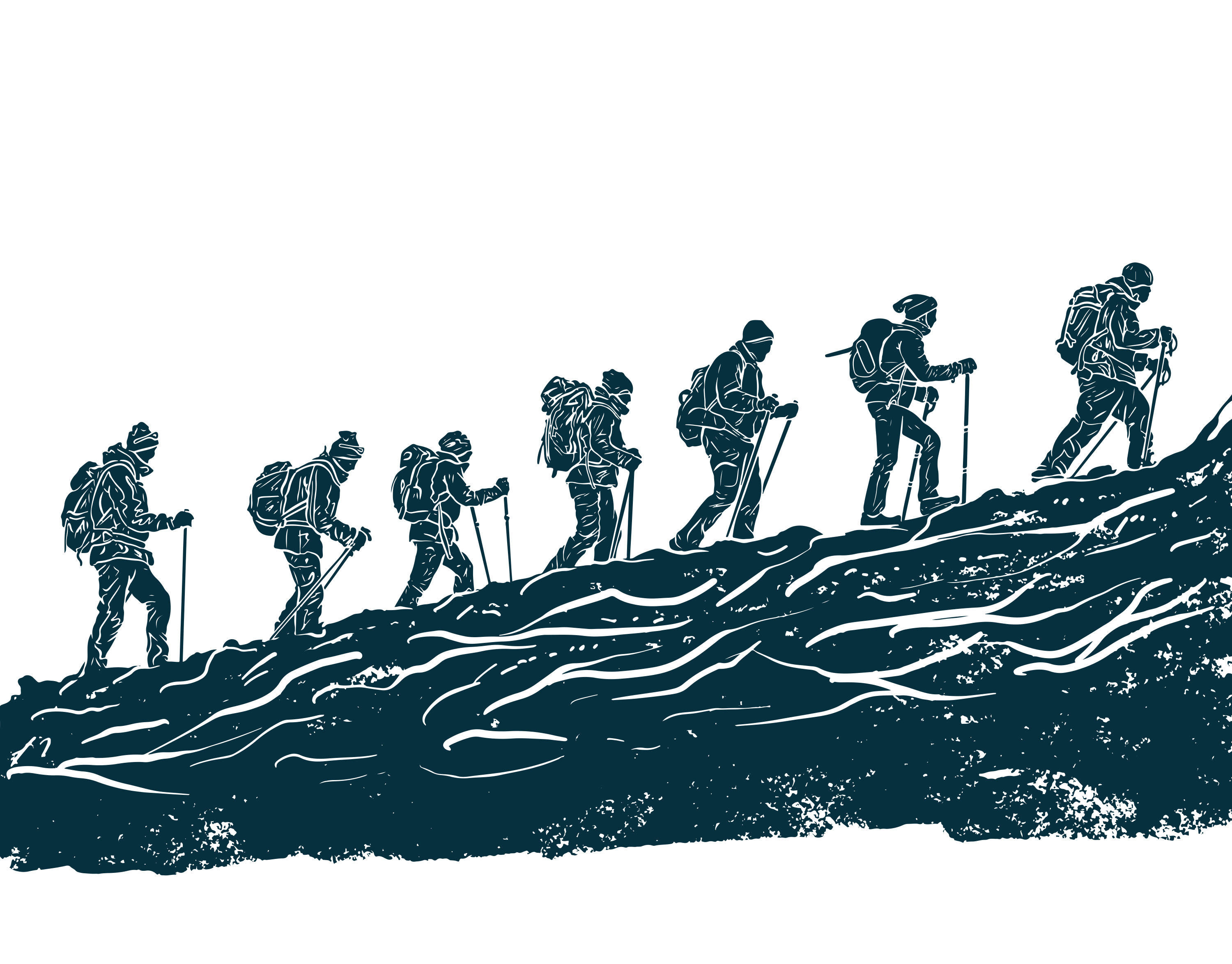
Africans’ work in restitution demonstrates that it is not a straightforward process. It is a complex, relational journey that requires careful navigation, multi-stakeholder collaboration, and the centring of community agency and dignity.