

The Restitution Efforts of Oba Akenzua II and the Significance of the Benin Royal Stools
The Benin Royal Stools belonged to Oba Esigie, who ruled Benin from 1504–1550, and Oba Eresoyen, who ruled…
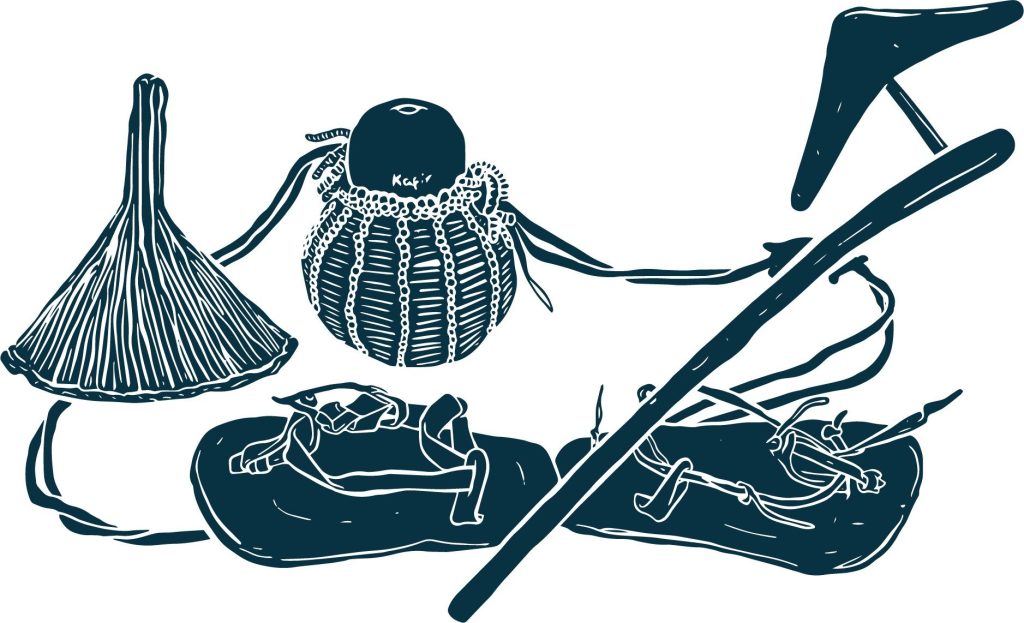
King Moshoeshoe was the founder of the Basotho Nation. The collection referred to in this case study comprises 80 out of 515 of his belongings. It includes functional homestead objects, adornments, clothing, divination equipment, storage vessels, basketry and ceramics. Among these belongings are a doctor’s drum set made of earthenware pottery, child figures, shields, spatulas, brass neck ornaments and pipes.
Thaba Bosiu, Lesotho, from the Basotho
The 80 belongings are significant because they give both context and credence to the historical narrative around Basotho material culture. Their return would instil a sense of identity and pride by reconnecting Basotho people to their past and to their heritage. At the same time, they could serve as a source of inspiration for creators of this generation. In addition, they would facilitate discourse and educational opportunities for Basotho as they imagine their next 200 years.
The British Museum, London, England
The collection of King Moshoeshoe’s belongings in the British Museum reflects the complexity of Lesotho’s relationship with Britain under Queen Victoria during a time of great strife caused by Boer settlers in the Orange Free State.
In the 1850s, the Basotho Nation, led by King Moshoeshoe, increasingly found itself in conflict with Boer settlers over land and territorial rights. The latter continuously encroached onto traditional Basotho land, resulting in significant losses of territory during this period.
In late 1861, King Moshoeshoe is said to have given, in friendship, a gift of belongings including those collected among residents of Thaba Bosiu to Britain for the 1862 International Exposition in London. This gift was also, in part, an attempt to negotiate protection from the British for his people. Following the exposition, the belongings were sold to the scholar and collector Henry Christy, who later bequeathed them to the British Museum upon his death in 1865.
King Moshoeshoe’s belongings form part of Basotho material cultural heritage. When the collection was removed, the Basotho were deprived of the benefits of these cultural belongings created by their ancestors, losing an avenue of learning from their heritage.
With the belongings in the UK, there is limited access to them and the knowledge they carry about their community of origin. Furthermore, many of the belongings in the collection were not made to last forever; their spiritual significance is diminished in conditions of prolonged separation, with spirits seen as trapped and awaiting release.
As Lesotho continues to define itself as a young nation, these cultural resources are vital in helping the Basotho to understand and define themselves more fully, particularly in terms of their creative cultural production.
In June 2017, Mrs ’Mats’osane Molibeli, Director of Lesotho’s Department of Culture, attended a six-week International Training Programme offered by the British Museum. While there, she was given exclusive access to King Moshoeshoe’s collection and others belonging to Lesotho. She enquired about the possibility of return but was informed that the British Museum was open only to a long-term loan, alongside training and knowledge-exchange opportunities to contribute to provenance research. This encounter framed the possibilities of return and set in motion the restitution efforts that followed.
The following year, a modest exhibition consisting of a few panels featuring photographs of some of the belongings was installed at the Thaba Bosiu Cultural Village Museum. The intention was to make the Moshoeshoe collection visually available to local audiences while preparations were being made for the loan repatriation of the belongings from the British Museum. The exhibition allowed for the collection’s symbolic presence in Lesotho, where people could engage with it and its significance.
In June 2019, a delegation consisting of Dijon Design – a South African design consultancy and Her Excellency Mrs Rethabile Mokaeane, High Commissioner of the Kingdom of Lesotho at the time, visited the British Museum. They met with Hartwig Fischer, Director of the British Museum and two other representatives to formally begin negotiations. Around the same time, Dijon Design was holding stakeholder meetings with the Department of Culture in Lesotho to inform the public about plans for the Lesotho National Museum, already under construction. The news was received with enthusiasm, and the ground was ripe for broader public outreach to promote the museum and, by extension, the collection.
Following these engagements Dijon Design wrote a formal letter in December 2019 to follow up on the June meeting. The letter retraced the previous conversations with key individuals and explicitly demanded a long term loan of 80 of King Moshoeshoe’s belongings. It concluded by acknowledging that other formal documents would still be required in due course, including the loan request forms, condition report forms and a facilities report. Their intention was for the exchange to culminate in the signing of a Memorandum of Understanding. However, the COVID-19 pandemic led to delays in construction of the National Museum, which affected progress on Lesotho’s side.
On the 24th May 2025, Lineo Segoete (ORA Case Study Researcher) hosted a town hall or pitso in Lesotho, inspired by two key elements: the traditional practice in Sesotho culture that ensures democratic voice and equal representation in matters of social interest and governance; and the gathering together to re-educate Basotho on the significance of their cultural heritage and the impact of its loss on Lesotho’s cultural life. The town hall stimulated agency and conversations about the collection.
The event also created a conducive environment where Basotho could speak among themselves and with other Africans about these issues. This decision to have what we dubbed “a family meeting”, was prompted by the realisation that such conversations are usually led by the West. Even in the best of circumstances, the presence of Westerners in these spaces tends to influence people’s freedom of expression. The outcome was a vibrant debate and a sharing environment that fostered learning and instilled a sense of agency among the attendees.
Breakthrough
The Lesotho National Museum project is currently back on course. Conversations are therefore set to resume, and the British Museum will be re-engaged on the long-term loan of 80 of King Moshoeshoe’s belongings.
In Lesotho, administrative protocols must be put in place, and the infrastructure must be approved and deemed suitable for repatriation. Furthermore, conversations are already taking place between the Morija Museum, academics at the National University of Lesotho, the UNESCO National Commission in Lesotho and partners in South Africa, among others, to pave the way for more focused action around developing frameworks and processes for reparations and restitution in the region.

Lineo Segoete is an artistic research practitioner and cultural worker. With her creative roots in storytelling across various forms, her work is grounded in critical literacies spanning history and arts education. Her practice revolves around decoloniality, social justice and reparative cultural collaboration between academics and artists.
She has worked within the cultural sector as co-director and co-founder of Ba re e ne re Literary Arts and as a steering committee member for the Pan-African arts research collective Another Roadmap Africa Cluster (ARAC). She is Managing Director and Curator at the Livingstone Office for Contemporary Art (LoCA) and one half of the ART.1.ST (Art First) consultancy in Lesotho.
Lineo used a mixed-methods approach to conduct her case study research. She began with desk research and informal conversations with people deeply knowledgeable about the restitution case and the collection. She then explored a diverse set of sources ranging from traditional imperial research to more alternative modes such as the town hall, which was an in-situ collaborative knowledge production process.
Through this methodology, she sought to make the data collected accessible to readers while inviting further engagement and intervention with the source material. While investigating the promised long-term loan of 80 of King Moshoeshoe’s belongings from the British Museum, Lineo was struck by the fact that the conversation around this repatriation was not as visible as it could have been to Basotho.
This case study profile is a summary of research data gathered by Lineo Segoete. She was part of the fourth case study research cohort, which ran from April to July 2025. The information in this case study profile reflects the status of this restitution case as of July 2025.
The Benin Royal Stools belonged to Oba Esigie, who ruled Benin from 1504–1550, and Oba Eresoyen, who ruled…
The Ife Terracotta Head is thought to date back to the 12th to 15th century. Crafted in a…
The Georg Steindorff Collection, comprising 163 objects, is a central, yet complex, component of the Egyptian Museum-Georg Steindorff…
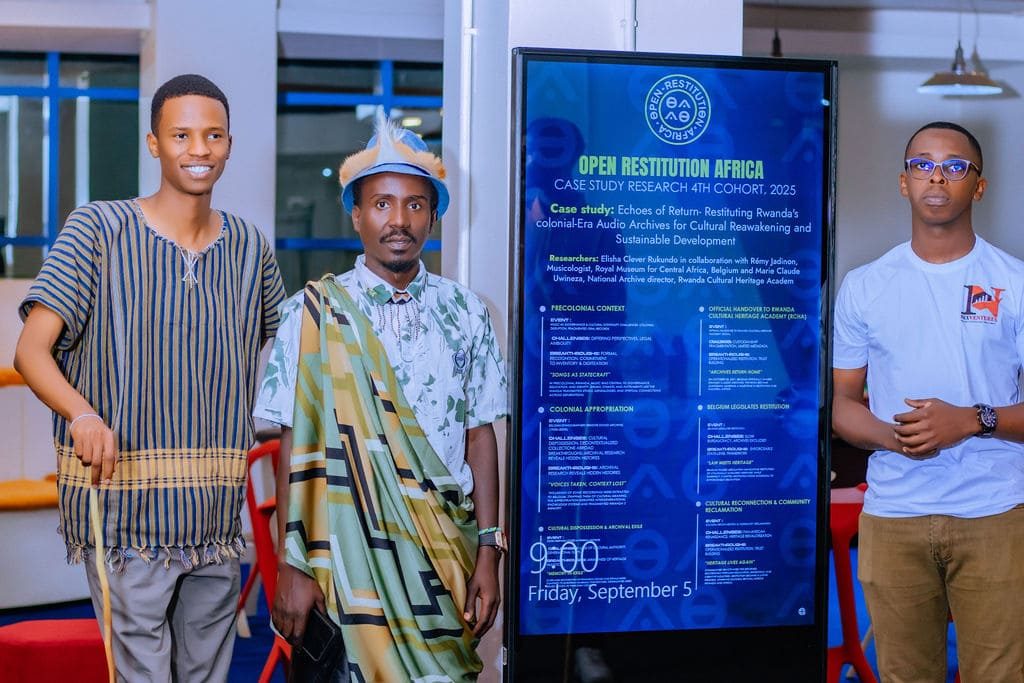
In August and September 2025, Open Restitution hosted Restitution 101 screenings in Lesotho and Rwanda. These public events…

Open Restitution Africa is pleased to share that we have completed our largest and final cohort of Case…

Between 19 – 20th March 2025, University of the Western Cape and Open Restitution Africa convened a two-day…