
Introduction:
Open Restitution Africa’s case study model has been pivotal in revealing the complexities of restitution work within African communities. Rather than relying on conventional fieldwork conventions, the need arose to break the mould and reconfigure approaches to better suit the specific realities of our continent’s context. It provides a comprehensive roadmap for working in and with communities to navigate the intricate processes of knowledge production, return, repatriation, and reparations relating to dislocated human ancestors and cultural heritage.
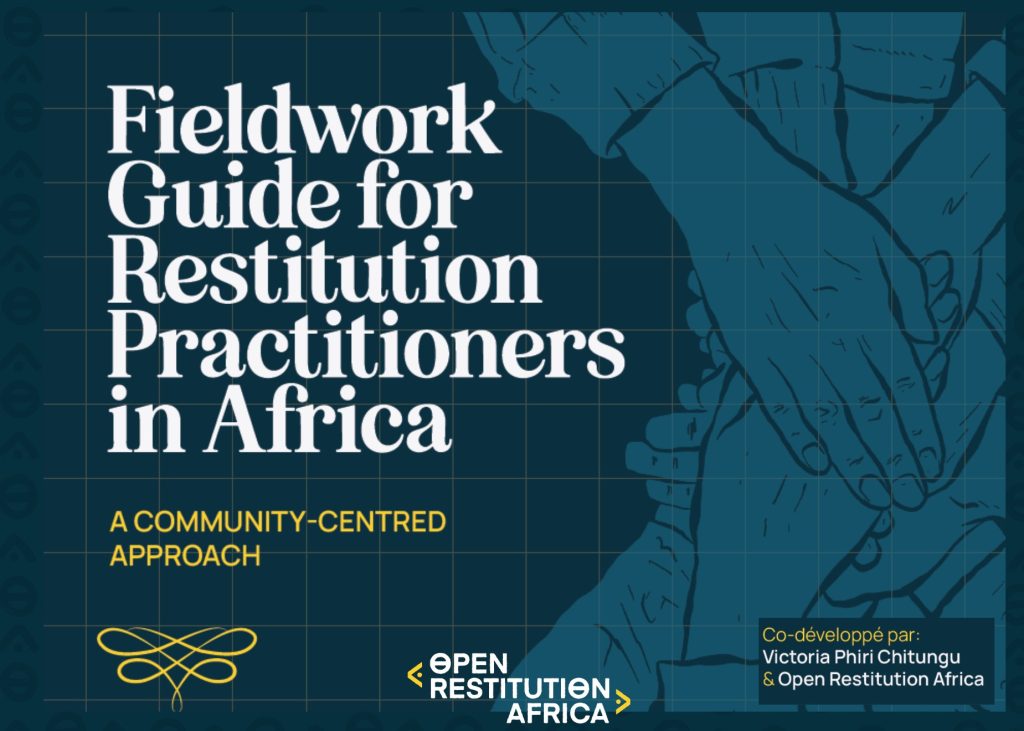
The fieldwork guide offers practical advice on pre-fieldwork preparation, ethical data collection, and navigating local political contexts with humility. Through case studies, it illustrates the challenges of addressing historical trauma, building stakeholder trust, and managing knowledge gaps via oral traditions. It also underscores the need for reciprocity, ensuring research benefits communities through knowledge sharing and dignified engagement.
It is designed to support three primary stakeholders:
- Restitution practitioners and researchers, who gain standardised, culturally appropriate methodologies for handling sensitive histories of dispossession with integrity.
- Affected communities, who are positioned as central authors and decision-makers in their own restitution journeys rather than passive research subjects
- Policymakers, who are offered practical tools to align repatriation policies and diplomatic stances with transparency, accountability, and the lived experiences of African communities.
Ultimately, this resource serves as a toolkit to promote accountability and transparency in the ongoing effort to restore African belongings, embodiments and human ancestors to their rightful origins.
How Was The Guide Developed:
The development of this guide began with the convergence of deep, rich institutional and professional knowledge that was siloed within internal documentation and individual expertise. Between March 2023 and July 2025, ORA conducted exploratory case studies—led by Phumzile Twala and Syokau Mutonga—and supported four researcher cohorts, generating a wealth of experiential data.
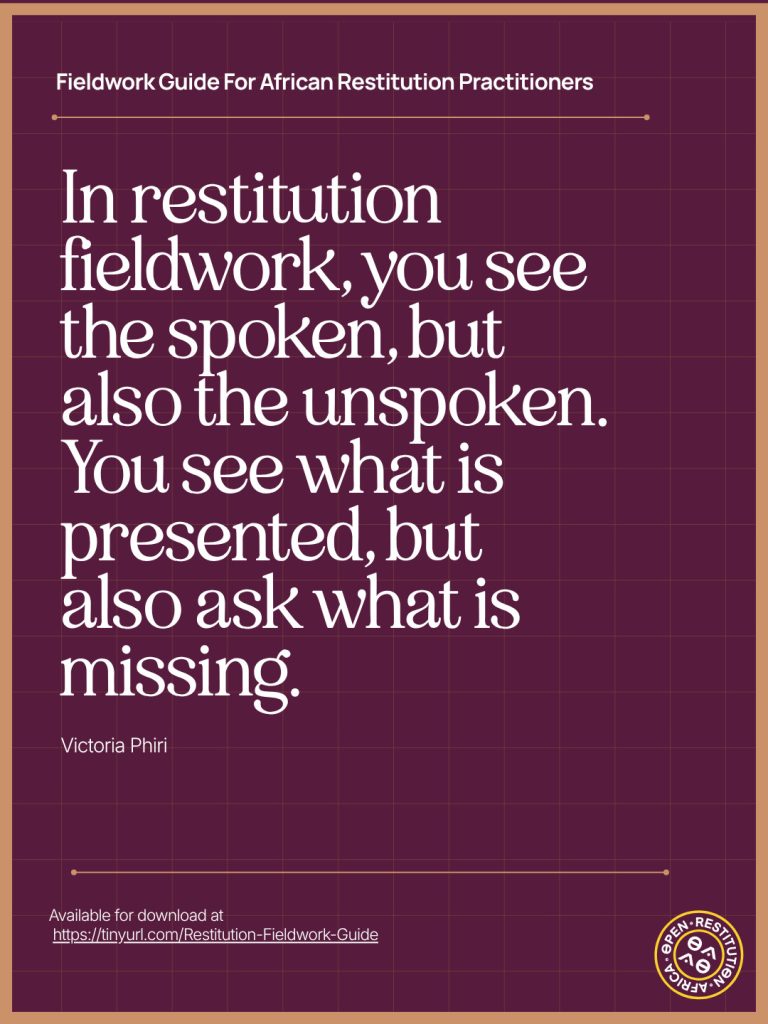
This insight found a perfect complement in the deep, localised groundwork of Victoria Phiri Chitungu, a Zambian museum professional, restitution practitioner and 4th cohort member who has an extensive track record of bridging the gap between museums and communities in rural Zambia through fieldwork.
This combined body of experience addressed the specific need we identified for a structured, practitioner-led guide—one made evident by the challenges and pivots our researchers navigated during fieldwork for their case studies.
To translate this vision into reality, we initiated a formal collaboration. Phumzile Twala (ORA Research Associate) spearheaded the co-development process alongside Chitungu and co-founder Chao Tayiana Maina. This team first established the guide’s scope, defining its audience, tone, and core messaging. By synthesising Victoria’s field notes with ORA’s monitoring and evaluation documentation, the team crafted a draft structure that was subsequently refined through internal peer review.
Recognising that a guide on restitution must be truly multi-vocal, Twala and Chitungu next launched a community of practice consultation process. By engaging the methodology experts that had supported us in developing our research approach and our case study researchers, we identified and addressed shared pain points across the continent. This stage was critical: it allowed us to integrate direct quotes and lived experiences into the guide, showcasing the diversity of situations that practitioners find themselves in across the continent, within a shared ethical framing for community-centred approaches.
The final stage involved copyediting, French translation, and professional design. This work ensured the guide remained accessible, avoiding overly technical jargon while guaranteeing the resource could be effectively utilised and navigated across both Anglophone and Francophone regions.
Core Fieldwork Research Considerations:
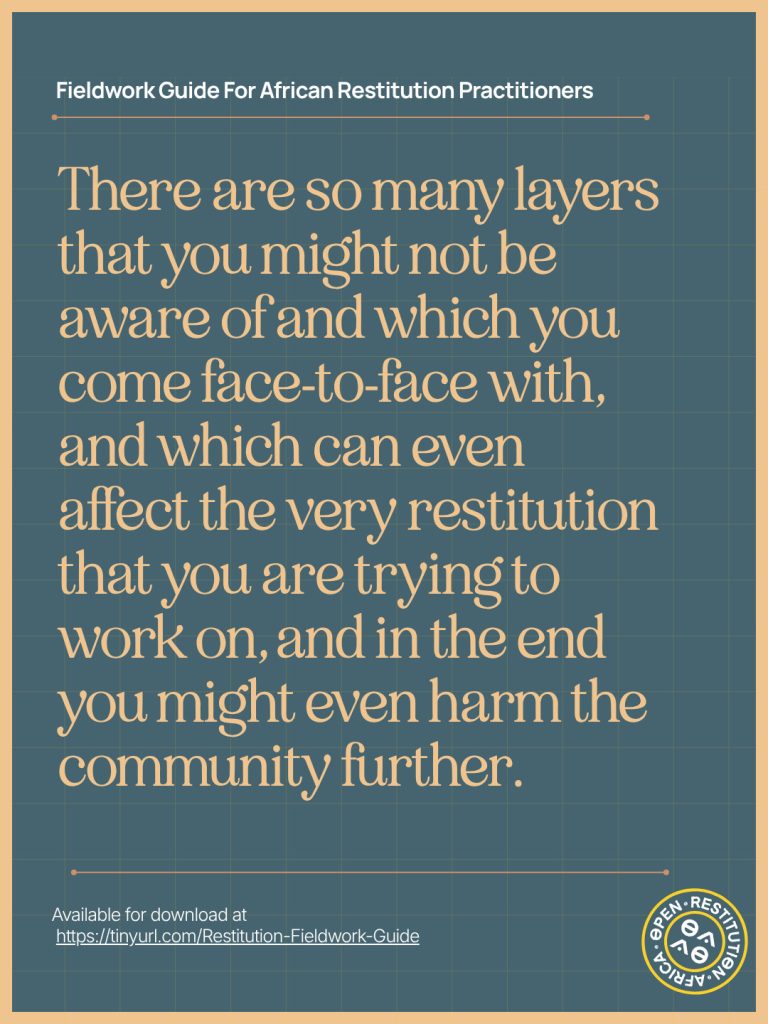
“Restitution is not as simple as it looks. There are so many layers that you might not be aware of and which you come face-to-face with, and which can even affect the very restitution that you are trying to work on, and in the end you might even harm the community further” – Victoria Phiri Chitungu
This guide provides a comprehensive framework for ethical restitution fieldwork, spanning pre-fieldwork preparation, respectful community engagement, and navigating sensitive histories. Drawing on case studies from countries like Rwanda and Nigeria, it offers practical advice on managing stakeholder relationships, addressing historical trauma, and centring communities as benefactors in research design and implementation. To ensure culturally responsive practice, the guide outlines shared protocols that emerged across regions—such as respecting local linguistic norms, observing appropriate dress, and participating in community life—to ensure research is conducted with humility and awareness.
The approach to conducting fieldwork based on Africa-centred restitution is presented in the guide in the following sections:
Pre-fieldwork preparation and contextual analysis: This section outlines the importance of thorough fieldwork preparation, enabling researchers to establish a clear roadmap, communicate research goals transparently and manage time efficiently.
- Preparation before fieldwork: This step ensures that researchers take the time to understand the community’s history, values and dominant culture traits. Having a highly defined purpose and evaluating how it aligns or conflicts with the community’s own interests helps reduce delays, secure local cooperation, and avoid wasting time. Furthermore, identifying key stakeholders provides the researcher with crucial guidance, protection, and a pathway to access the wider community.
- Starting the engagement: Once physically in the community, researchers must position themselves with deliberate intent to foster mutual respect and ensure a smooth, transparent exchange. Part of this process includes making appointments, preparing to listen with humility, being prepared to be comfortable with practicing the ritual of self-introduction as a way of establishing transparency, developing a communication plan and anticipating challenges.
- Community engagement and contextual understanding: Active community consultation and having a willingness to understand community motivations are key ingredients here, to avoid any misunderstandings.
- Appreciating the historical context: Mishandling sensitive histories can easily reopen old wounds and trigger resentments that undermine the research. Developing an awareness of the effects of lasting trauma is critical.
- Respecting cultural protocols: This includes the use of local languages, addressing people properly, dressing appropriately, sharing food, participating in community life and acknowledging cultural variations. Having an awareness of these helps researchers avoid violating local customs.
Data collection methods, tools and ethical protocols: This section highlights that restitution research deals with highly sensitive histories of dispossession, force, dominance and extraction. It provides ethical protocols which should be adhered to to avoid repeating colonial patterns of exploitation. Ultimately, this section emphasizes that ethical protocols are not bureaucratic optional hurdles but are essential mechanisms that protect the dignity of African communities.
Case studies: This section illustrates the diverse real-world complexities that restitution practitioners face across the continent. This moves the guide’s concepts into practical reality through distinct scenarios.